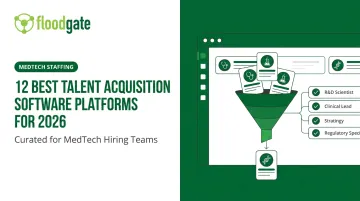
The right talent acquisition software shortens time-to-hire, lowers cost-per-hire, and keeps candidates engaged instead of ghosting your process. The wrong choice does the opposite: duplicate data entry, missed follow-ups, and top candidates who accept an offer somewhere else while your team is still scheduling round three.
This guide breaks down the 12 best talent acquisition software platforms for 2026, spanning ATS, recruiting CRM, AI sourcing, video interviewing, and talent intelligence categories, so your team can choose with confidence.
Key Takeaways
- Most hiring teams need a combination of tools, not a single all-in-one platform
- Match your choice to hiring volume and role complexity, not brand name recognition
- Prioritize integration depth, DEI sourcing capability, and transparent pricing
- Specialized industries like MedTech often need human recruiting expertise alongside software
Overview of Talent Acquisition Software in 2026
Talent acquisition software is the umbrella term for tools that source, screen, engage, and hire candidates. It's a bigger category than a standalone applicant tracking system (ATS), built to fix recruiting's toughest pain points: slow time-to-fill, disconnected candidate data, and rising candidate expectations.
The market has shifted fast. What started as simple applicant databases now includes AI-driven sourcing agents, skills-based matching engines, and labor market intelligence platforms that predict where talent is headed before it moves.
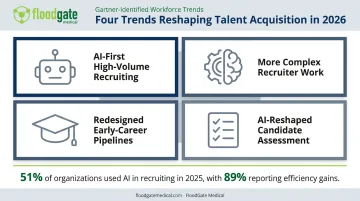
AI adoption backs this up. In 2025, 51% of organizations used AI to support recruiting, and among those users, 89% reported meaningful time savings or efficiency gains, according to SHRM's 2025 Talent Trends research. That's a real shift from a few years ago, when AI in hiring was mostly a pilot project.
Gartner's newest research points to where this is heading next. Its 2026 talent acquisition trends report names four forces reshaping the function:
- AI-first high-volume recruiting
- More complex recruiter work
- Redesigned early-career pipelines
- AI-reshaped candidate assessment
Below, we cover the 12 best platforms for 2026 across ATS, CRM, AI sourcing, assessments, and talent intelligence categories.
Top 12 Best Talent Acquisition Software Platforms for 2026
We evaluated each platform on functionality depth, market adoption, integration ecosystem, pricing transparency, and fit across company sizes and industries. Here's how they stack up.
Greenhouse
Greenhouse is an established ATS built for structured, repeatable hiring. Mid-market and enterprise teams lean on it because it forces consistency across interviewers, which matters when you're scaling a hiring team fast.
What makes it stand out: customizable interview scorecards tied to structured hiring workflows, so every interviewer evaluates candidates against the same criteria instead of gut feel.
| Best For | Structured, high-volume hiring teams needing consistency across interviewers |
| Key Feature | Customizable interview scorecards and structured hiring workflows |
| Pricing | Quote-based (Core, Plus, and Pro tiers) — confirm current published rates directly with Greenhouse |
Lever
Lever blends ATS functionality with a built-in recruiting CRM, so you're not bolting on a separate tool to nurture passive candidates. Pipeline management and long-term talent nurture live in one interface.
Teams can track active applicants while simultaneously building relationships with candidates who aren't ready to apply yet, all without switching tools.
| Best For | Teams needing both applicant tracking and long-term candidate nurturing |
| Key Feature | Native CRM for building and re-engaging talent communities |
| Pricing | Quote-based enterprise pricing |
Workday Recruiting
Workday Recruiting lives inside Workday's broader HCM suite. It's popular with large enterprises already running payroll and workforce planning on Workday, because everything shares the same data layer.
The appeal here is unified data across the entire hire-to-retire employee lifecycle rather than standalone recruiting features, which matters more once you're managing tens of thousands of employees.
| Best For | Large enterprises prioritizing system consolidation over best-of-breed features |
| Key Feature | Unified data across hire-to-retire employee lifecycle |
| Pricing | Custom enterprise contracts; requires vendor consultation |
iCIMS
iCIMS is an enterprise-grade talent cloud with a large marketplace of pre-built integrations. Compliance-heavy organizations gravitate toward it because it's built to handle complex, high-volume hiring without breaking.
Strong compliance tooling paired with an AI talent acquisition suite designed for scale sets it apart. iCIMS is also TrustArc Responsible AI certified, which matters increasingly as states pass AI hiring regulations.
| Best For | Large, compliance-sensitive organizations with complex hiring needs |
| Key Feature | Extensive integration marketplace and AI talent acquisition suite |
| Pricing | Custom enterprise quote |
SmartRecruiters
SmartRecruiters built its talent acquisition suite around an open marketplace of vetted vendor integrations. Instead of locking you into one vendor's assessment or sourcing tools, it lets you plug in whatever fits.
Global enterprises can extend core ATS functionality without rebuilding their entire workflow every time they add a new tool.
| Best For | Global enterprises wanting a modern, modular hiring marketplace |
| Key Feature | Open vendor marketplace for extending core ATS functionality |
| Pricing | Essential tier starts at $14,995/year; higher tiers are custom, based on company size and modules |
Ashby
Ashby is an all-in-one ATS built specifically for data-driven, high-growth tech companies. Its native analytics and reporting are strong enough that many teams skip building a separate BI dashboard for hiring metrics.
The draw: built-in advanced analytics and pipeline reporting that give recruiting leaders real-time visibility without exporting data elsewhere.
| Best For | High-growth, data-driven talent teams |
| Key Feature | Built-in advanced analytics and pipeline reporting |
| Pricing | Foundations tier starts at $400/month for up to 100 employees; 10% discount with annual commitment |
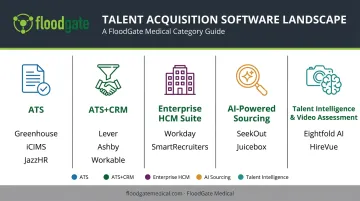
Workable
Workable is built for smaller teams that need straightforward hiring workflows without a steep learning curve. It's SMB-friendly, with transparent, publicly listed pricing rather than a mandatory sales call.
Quick setup, one-click job board distribution, and AI-assisted sourcing (via Workable Agent) make it a fast onboard for lean teams without dedicated recruiting ops staff.
| Best For | Small-to-medium businesses needing straightforward hiring workflows |
| Key Feature | AI-powered sourcing paired with simple, transparent pricing |
| Pricing | Standard Recruiting plan starts at $299/month ($3,588/year) |
JazzHR
JazzHR is a budget-friendly ATS built for startups and small businesses that need essential recruiting workflows without enterprise overhead.
Pre-built workflow templates and compliance tools, including EEO-1, OFCCP, and VEVRAA tracking, cut setup time for lean teams juggling recruiting alongside other responsibilities.
| Best For | Startups and small businesses with limited recruiting resources |
| Key Feature | Ready-made hiring workflow templates and compliance tracking |
| Pricing | Hero plan starts at $116/month billed annually; Plus and Pro tiers range from $3,480 to $5,508/year |
HireVue
HireVue combines video interviewing with AI-driven screening and science-backed assessments. It's built to remove scheduling bottlenecks when you're evaluating hundreds or thousands of candidates at once.
On-demand and live video interviews, plus game-based and coding assessments, let teams scale candidate evaluation without adding interviewer headcount. Its interview scheduling tools include self-scheduling via email and SMS with calendar integrations.
| Best For | High-volume and campus recruiting needing structured remote evaluation |
| Key Feature | AI-powered assessments plus automated interview scheduling |
| Pricing | Custom enterprise quote |
SeekOut
SeekOut is an AI-powered sourcing platform built around deep diversity and technical talent search. Its filters go far beyond keyword matching in a standard résumé database.
The differentiator: granular filters designed to surface underrepresented and niche technical talent that generic ATS databases routinely miss, particularly useful for engineering and specialized science roles.
| Best For | Teams prioritizing diversity sourcing and hard-to-find technical skills |
| Key Feature | Deep DEI-focused search filters across a large candidate database |
| Pricing | Recruit Core starts at $149/month (paid annually) or $179 month-to-month; 14-day free trial available |
Juicebox (PeopleGPT)
Juicebox is an AI agent-based sourcing engine that layers on top of your existing ATS rather than replacing it. Its PeopleGPT feature lets recruiters run natural-language searches, like typing a plain-English description of the candidate you want.
The engine searches across a large aggregated profile database and returns candidates with verified contact details, cutting manual sourcing time considerably for teams targeting passive talent.
| Best For | Proactive sourcing teams targeting passive, hard-to-reach candidates |
| Key Feature | Natural-language AI search with verified candidate contact info |
| Pricing | Plans start at $99/month; free trial available |
Eightfold AI
Eightfold AI is a talent intelligence platform that uses deep learning to match candidates on skills and potential rather than job titles alone. Its matching engine relies on embeddings and explainable models rather than a black box.
It supports both external hiring and internal mobility by mapping skills adjacency across an entire workforce, useful for enterprises trying to fill roles from within before sourcing externally.
| Best For | Enterprises pursuing skills-based hiring and internal mobility at scale |
| Key Feature | AI-driven skills and potential matching beyond resume keywords |
| Pricing | Custom enterprise quote |
Why Software Alone Isn't Enough for Specialized Industries Like MedTech
Generic ATS and AI-sourcing tools are trained on broad talent taxonomies. That works fine for common roles. It breaks down for niche technical and regulatory skill sets, think clinical engineering, regulatory affairs, or biocompatibility expertise, where the same job title can mean wildly different qualifications depending on the company.
The result is a familiar frustration: shortlists full of candidates who look right on paper but miss the specific technical or regulatory experience the role actually demands.
A similar gap shows up in diversity hiring. Software-driven DEI filters help widen reach and surface a broader candidate pool, but building an actually equitable pipeline in a narrow, competitive technical market still takes human judgment and real industry relationships, not just better filters.
That human judgment matters most in three areas:
- Niche technical hires where job titles mask different qualification requirements
- Executive searches where the candidate pool is small and reputation matters
- Equitable pipeline building that depends on real industry relationships, not just filters
This is where a specialized recruiting partner earns its place alongside a software stack. FloodGate Medical focuses exclusively on MedTech talent acquisition, pairing deep industry expertise with a DEI-driven methodology built for roles that generic algorithms frequently misjudge.

Rather than replacing your ATS or sourcing tools, this kind of partnership fills exactly the gaps those tools leave behind.
How We Chose the Best Talent Acquisition Software
We prioritized functional breadth over marketing polish. Specifically:
- Sourcing, tracking, engagement, and analytics: does the platform cover multiple stages of the hiring funnel, or just one?
- Integration ecosystem: can it connect with your existing HR tech stack without custom development?
- Pricing transparency: did the vendor publish real numbers, or does everything require a sales call?
A common mistake teams make: choosing software based on brand recognition or a slick demo, rather than testing it against real hiring workflows and their own niche role requirements. A polished demo doesn't tell you how the tool handles your weirdest req.
Beyond workflow fit, two factors carried equal weight: DEI/diversity sourcing capability and customer support quality. Both affect hiring outcomes directly, and each determines whether your team actually adopts the platform six months after the contract is signed, not just during onboarding.
Conclusion
There's no single "best" platform on this list. The right choice depends on your hiring volume, how technical or niche your roles are, and whether your bigger gap is workflow efficiency or proactive sourcing.
Pilot your shortlisted tools against real, current openings, including your hardest-to-fill technical roles, before signing a contract. Reassess scalability and ROI annually, since hiring needs shift faster than most contracts anticipate.
Software alone won't close every gap, though. For specialized MedTech and healthcare technology hiring, pairing your software stack with a dedicated, DEI-focused recruitment partner like FloodGate Medical can close gaps that generic algorithms consistently leave behind.
Frequently Asked Questions
What is the difference between an ATS and a CRM for talent acquisition?
An ATS manages active applicants through structured hiring workflows, from application to offer. A recruiting CRM nurtures relationships with passive or future candidates over time. Many modern platforms, like Lever and Greenhouse, now combine both.
What are the top tools for talent acquisition?
It depends on your needs. This guide covers ATS, CRM, AI sourcing, video assessment, and talent intelligence platforms, and the "top" choice shifts based on your company size and hiring complexity.
How much does talent acquisition software typically cost?
Pricing spans roughly $99–$300/month for SMB-focused tools up to six-figure enterprise contracts. According to Capterra's applicant tracking software research, popular ATS platforms typically run $180–$2,800/month depending on team size, so request quotes tailored to your needs.
Can AI-powered talent acquisition software replace human recruiters entirely?
No. AI speeds up sourcing and screening, but human judgment still drives relationship-building and closing offers. This matters most in specialized fields like MedTech, where trust and industry relationships are key.
What features should I look for in talent acquisition software for 2026?
Prioritize sourcing intelligence, workflow automation, integration depth, DEI sourcing capability, and detailed reporting. Pricing transparency and support quality matter just as much as feature lists.
Is talent acquisition software suitable for niche or specialized industries like MedTech?
Software handles volume and process efficiency well. But specialized industries often need human expertise, too. For hard-to-fill MedTech roles, firms like FloodGate Medical add specialized recruiting knowledge that generic algorithms tend to miss.