Introduction
Every diagnosis your doctor makes, every drug in the pharmacy, and every catheter used in a cath lab exists because someone, somewhere, ran a study.
Health care research is the engine behind modern medicine, even though most patients never think about the years of trials and data collection that made their treatment possible.
For MedTech companies and providers, the stakes are just as high. New devices can't reach patients without rigorous testing, and rigorous testing can't happen without skilled research teams and strong ethical safeguards.
Move too slowly, and patients wait for breakthroughs they need now. Move too fast without oversight, and you risk both participant safety and public trust.
This article covers what health care research actually involves, why it matters for patients and providers, how regulators keep it honest, and who does the work that makes it all possible.
Key Takeaways
- Health care research spans clinical, behavioral, genetic, and public health studies that shape today's treatment decisions
- Rigorous research prevents disease, sharpens diagnostics, and lowers long-term health system costs
- IRBs and Good Clinical Practice standards protect participants and keep trial results trustworthy
- Skilled, diverse research teams determine how well findings translate into real patient benefit
What Is Health Care Research?
Health care research is a systematic investigation into a human health issue, aimed at generating knowledge that helps patients, providers, or entire communities.
It's typically funded through some mix of government agencies, private foundations, and industry sponsors. Each funder asks a slightly different question, but all work toward the same goal: proof that a treatment, device, or approach actually works.
Research breaks down into a few core categories.
Clinical Research
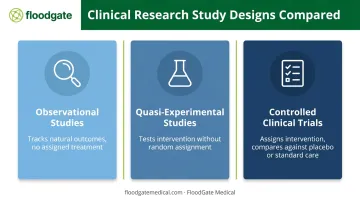
Clinical research is the umbrella term for studying new drugs, devices, and treatment protocols in real people. It generally falls into a few core designs:
- Observational studies track what happens in natural settings without researchers assigning treatments
- Quasi-experimental studies test an intervention without randomly assigning participants to groups
- Controlled clinical trials assign an intervention and compare results against a control, such as a placebo or standard care
For manufacturers of interventional cardiology devices, this distinction matters. A new microcatheter design typically moves through controlled trials before it ever reaches a cath lab shelf.
Behavioral and Public Health Research
Behavioral research studies how people respond to illness or treatment, including why some patients stick to a medication regimen and others don't. Public health research zooms out to the population level, tracking things like flu transmission patterns or measuring whether a smoking cessation campaign actually reduced smoking rates in a community.
Genetic and Precision Medicine Research
Genetic research identifies risk factors written into our DNA. The clearest example is BRCA1 and BRCA2, discovered in 1994 and 1995, tumor-suppressor genes linked to elevated breast and ovarian cancer risk. That discovery didn't just add a line to a textbook. It created an entirely new screening pathway, letting women with a BRCA mutation pursue earlier, more targeted monitoring.
That's precision medicine in practice: using a patient's genetic profile to tailor prevention and treatment instead of relying on one-size-fits-all guidelines.
Why Health Care Research Matters
Research is the foundation of evidence-based medicine. Treatments reach patients only after proof that they're safe and effective, not just a promising theory.
Preventing Disease Before It Spreads
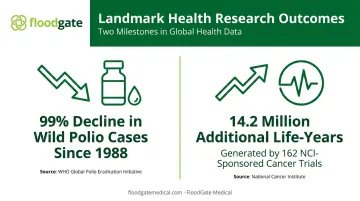
Vaccination programs built on decades of research show what's possible. Wild polio cases have fallen more than 99% since 1988, when the disease paralyzed an estimated 350,000 people a year, according to the World Health Organization.
That kind of decline doesn't happen by accident. It takes sustained epidemiological research paired with coordinated global vaccination campaigns.
Diagnostics have advanced alongside prevention, too. Improved imaging technology now catches cancers earlier and more accurately than screening methods from a generation ago, giving physicians a genuine head start on treatment.
Better Treatments, Measured in Life-Years
Clinical trials translate directly into more time with patients. A 2023 analysis of 162 National Cancer Institute-sponsored trials estimated they generated 14.2 million additional life-years for U.S. cancer patients, according to a 2023 study in the Journal of Clinical Oncology.
That's the entire point of running a trial: turning uncertainty into a proven benefit for real patients.
Research is also the primary tool for tackling harder, slower-moving problems:
- Rising antimicrobial resistance, which threatens the effectiveness of common treatments
- Chronic disease, now the largest driver of U.S. health care spending
- An aging population that will need more complex, longer-term care
The Economic Case
Prevention is consistently cheaper than treatment. Vaccination programs, earlier cancer detection, and better chronic disease management all reduce downstream costs: fewer hospitalizations, fewer emergency interventions, less long-term care.
That's the systemic value research delivers well beyond any single patient's chart. It's why funders keep investing even when returns take years to materialize.
How Health Care Research Is Overseen: Ethics, Regulation, and Safety
Unregulated innovation puts patients at risk, no matter how promising the science looks. Several layers of regulation exist specifically to keep research participants safe while still letting science move forward.
Institutional Review Boards Set the Ground Rules
Before a single participant enrolls, an Institutional Review Board (IRB) has to review and approve the study protocol. Under federal regulation, an IRB can approve research only when:
- Minimizes risks to participants and keeps them reasonable relative to expected benefits
- Selects subjects equitably, without placing unfair burden on any one group
- Documents informed consent properly for every participant
- Maintains adequate privacy, confidentiality, and safety monitoring
Good Clinical Practice Keeps Data Trustworthy
Good Clinical Practice (GCP) is the international standard, most recently updated through the ICH's E6(R3) guideline, governing how trials are designed, conducted, monitored, and reported. GCP exists so that data from a trial in Ohio means the same thing as data from a trial in Germany.
Ethical Principles in Practice
Three principles from the Belmont Report anchor nearly every oversight decision:
- Respect for persons, implemented through informed consent
- Beneficence, implemented through risk-benefit assessment
- Justice, implemented through fair, equitable subject selection
Informed consent is an ongoing process, not a one-time signature. Participants must genuinely understand what they're agreeing to, the risks involved, and their right to withdraw at any time.
Extra Protections for Vulnerable Populations
Children and cognitively impaired adults need additional safeguards. Federal rules require parental permission and, when possible, the child's own assent. For adults who can't consent independently, a legally authorized representative may step in, but only under specific legal or institutional criteria.
FDA Review: The Final Checkpoint
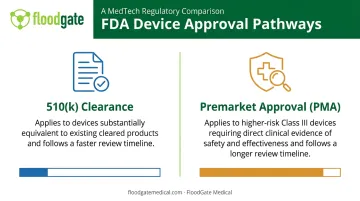
Before a new drug or device reaches the market, the FDA reviews it. Devices follow different pathways depending on risk:
- 510(k) clearance for devices shown to be substantially equivalent to an existing product
- Premarket approval (PMA) for higher-risk Class III devices, requiring direct evidence of safety and effectiveness
For MedTech companies, navigating these checkpoints is as much a compliance responsibility as a scientific one, and it's often where research teams and regulatory specialists need to work in lockstep.
The Talent Behind the Breakthroughs: Why Skilled, Diverse Research Teams Matter
Every clinical trial that succeeds does so because of the people running it, not just the protocol on paper.
A Multidisciplinary Effort
Behind every breakthrough sits a team of physicians, biostatisticians, data analysts, clinical research associates, and regulatory specialists. Their combined expertise determines how quickly, and how well, a study moves from first patient enrolled to final results. The wrong skill mix or a slow hire can stall a trial timeline by months.
Diversity Gaps Still Undermine Research Quality
Representative research requires representative teams and participant pools, and the data shows there's real work left to do. A peer-reviewed study of 22 high-risk medical devices found that White participants made up between 69% and 99% of pivotal-trial populations where race was reported, according to a study in the National Library of Medicine.
Limited representation like this makes it harder to know whether a device performs consistently across different patient groups. It's exactly the kind of gap diverse research teams are positioned to help close.
Building the Pipeline
This is where staffing strategy becomes a research quality issue, not just an HR one. FloodGate Medical works with device manufacturers and life sciences organizations to build specialized, diverse talent pipelines across:
- Clinical Affairs and Medical Affairs
- Research and Development
- Regulatory and Quality functions
Our approach, spanning permanent placement, contract and interim staffing, and hiring-manager training, is built on a simple idea: a more diverse team asks better questions, catches blind spots earlier, and produces research that generalizes to the patients who'll use the product.

That connection directly affects whether a trial's findings hold up once a device reaches the broader market. Learn more about how we support MedTech talent needs across the industry.
Challenges Facing Health Care Research Today
Even well-designed research runs into structural friction. Three challenges show up again and again.
Funding Is Fragmented
Research relies on a patchwork of government agencies, private foundations, and industry sponsors, each with different priorities and timelines. When funding gaps hit, promising studies stall or shrink in scope regardless of scientific merit.
The Translation Gap
Even when funding holds, a second obstacle waits: findings from a successful trial don't automatically become standard practice. The lag between discovery and adoption has historically stretched well beyond a decade in many fields. That timeline varies enormously by disease area and study type, and it rarely moves as fast as patients need. Learning health systems, which cycle real-world clinical data back into ongoing research, are one of the more promising models for shortening that gap.
Diversity and Multisite Coordination
A third friction point often compounds the first two. Coordinating a study across dozens of sites introduces duplicative reviews, inconsistent local processes, and communication gaps between sites, even with centralized ethics review in place. Add the participant diversity issues covered earlier, and it's easy to see why some research findings apply more broadly on paper than they do in practice.
Addressing these friction points calls for stronger teams, better systems, and tighter oversight built into the process from the start.
Frequently Asked Questions
What is research in health care?
Health care research is a systematic investigation into a human health issue. It's typically funded by government agencies, foundations, or industry, with the goal of generating knowledge that benefits patients, providers, and communities.
What are the main types of health care research?
The main categories include clinical research (testing treatments in people) and behavioral research (how people respond to illness). Other types include public health research (population-level disease prevention) and genetic research (identifying inherited risk factors).
Who oversees the ethics of health care research?
Institutional Review Boards (IRBs) review and approve every study involving human participants. Good Clinical Practice (GCP) standards then govern how trials are designed, run, and reported worldwide.
What is the difference between clinical research and a clinical trial?
Clinical research is the broad field of studying human health questions. A clinical trial is one specific method within that field, testing an intervention on human participants against a control.
Why is diversity important in clinical research?
Diverse research teams and participant pools produce findings that better reflect and benefit the full range of patients who will eventually use a treatment or device.
How can someone participate in a health care research study?
Individuals can join research registries or enroll directly in a study. Either path includes an informed consent process that explains the risks, benefits, and their rights as a participant.