The problem isn't simply that recruitment and retention are challenging—it's that most organizations treat them as separate functions. In reality, the candidate you attract today becomes the employee you retain tomorrow. A unified talent strategy that connects how you hire with how you keep people delivers better outcomes: stronger teams, lower turnover, and faster innovation.
This article explores proven recruitment and retention strategies for the medical technology sector, introduces the 5 C's frameworks that guide hiring and retention decisions, and examines how specialized MedTech recruiting partners help companies access concentrated talent pools and build teams that stay.
Key Takeaways
- Integrate recruitment and retention into one talent strategy—not separate HR tasks
- Attract and keep talent with strong employer branding, clear job posts, and structured onboarding
- Keep MedTech professionals engaged through career growth, competitive pay, recognition, and trust
- Widen candidate pools and boost retention with diverse hiring that drives innovation
What Is Recruitment and Why It Matters
Recruitment is the complete process of identifying, attracting, screening, interviewing, and hiring candidates who have the skills, experience, and values your organization needs. It begins before a job is posted, with workforce planning and employer branding, and extends through offer acceptance and onboarding.
Common recruitment challenges include:
- Weak or unclear employer brand that fails to differentiate your company
- Slow, impersonal candidate experience with long gaps in communication
- Uncompetitive compensation packages compared to industry benchmarks
- Generic job descriptions that don't convey growth potential or role impact
- Narrow sourcing strategies that miss passive candidates
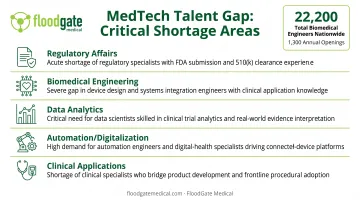
The MedTech hiring landscape is especially competitive. AdvaMed reported in 2025 that MedTech jobs have grown at three times the pace of overall U.S. manufacturing since 2018, with average salaries reaching $97,000. Meanwhile, the U.S. Bureau of Labor Statistics counts just 22,200 biomedical engineer positions nationwide, with roughly 1,300 openings expected annually through 2034.
A 2024 Irish MedTech skills survey spanning 16 medical device categories found that hiring managers faced their greatest difficulty filling technical and specialist roles, especially in digitalization, data analytics, and automation—functions increasingly critical to smart devices and software-enabled MedTech.
The harder part is finding people with regulatory knowledge, cross-functional technical depth, and comfort in fast-evolving product environments. Then you still have to convince them your company is where they should build their career.
Effective Recruitment Strategies
Build and Communicate a Strong Employer Brand
Your employer brand is how current employees, candidates, and the broader industry perceive your company as a place to work. A clear employee value proposition (EVP), meaning what you offer in exchange for talent, helps the right candidates self-select and improves offer acceptance rates.
Strengthen your employer brand by:
- Highlighting your mission, culture, and impact on patient outcomes
- Sharing employee stories, day-in-the-life content, and team spotlights
- Making your career page transparent about growth paths, benefits, and team structure
- Showcasing your presence at industry conferences (HIMSS, AdvaMed, LSI, RSNA, ViVE)
Write Clear, Transparent Job Descriptions
Generic job descriptions that list responsibilities without context fail to engage skilled candidates. Be specific about what the role involves, why it matters, and what success looks like. Strong MedTech postings usually spell out:
- Salary ranges or compensation bands (transparency builds trust)
- Growth trajectory and advancement opportunities
- Tools, technologies, and regulatory frameworks the role uses
- Team structure and cross-functional collaboration expectations
Diversify Your Sourcing Channels
Relying solely on job boards limits your reach. The best MedTech talent is often passive: employed elsewhere, but open to the right opportunity.
Expand sourcing through:
- Employee referrals: Incentivize your team to recommend qualified candidates
- LinkedIn outreach: Use advanced search to identify professionals with relevant device experience
- Industry events: Attend and recruit at conferences like NASS, AAOS, AOFAS, AUA, ASTRO, and the MedTech Strategist Innovation Summit
- Specialized recruiters: Partner with firms that maintain active MedTech talent pools and know where to find regulatory, R&D, and clinical specialists
FloodGate Medical, for example, maintains a database of more than 150,000 MedTech candidates. About 70% of its placements are passive candidates who weren't actively job hunting but moved when the right role showed up at the right time.
Build a Diverse, Inclusive Hiring Pipeline
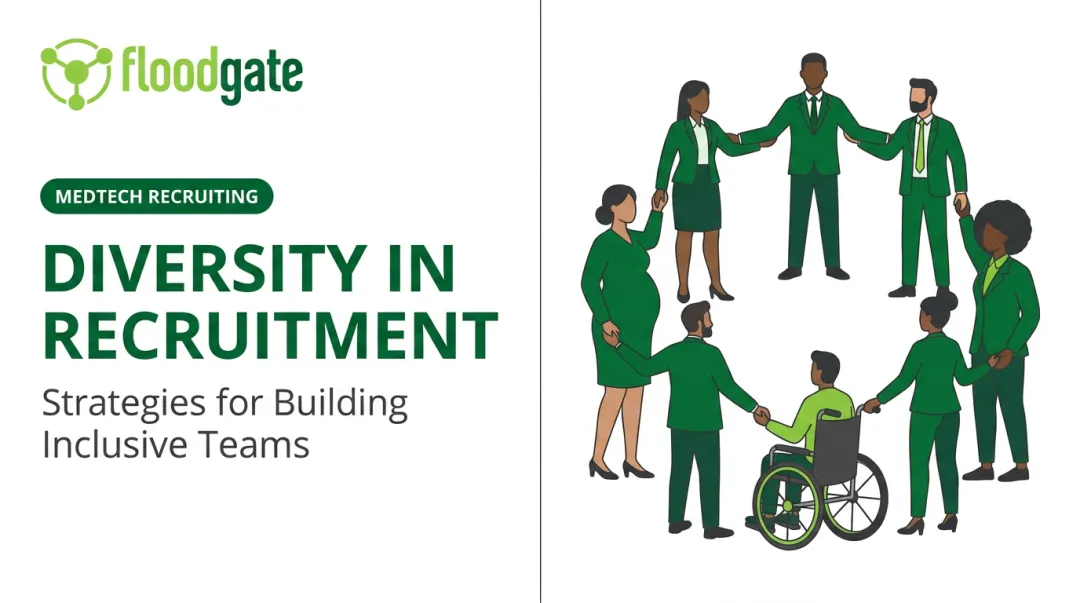
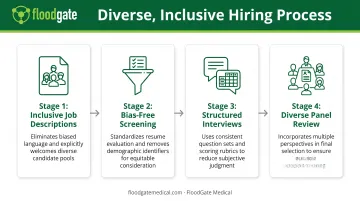
Diverse teams drive innovation and deliver better healthcare outcomes. To build a pipeline that reflects the patients your devices serve, remove bias from every hiring stage.
Best practices include:
- Using inclusive, outcome-focused language in job descriptions (avoid gendered or exclusionary terms)
- Structuring interviews with standardized scorecards to evaluate evidence, not gut instinct
- Assembling diverse interview panels to reduce individual bias
- Tracking demographic data to identify where candidates drop out of your funnel
FloodGate Medical builds on that discipline by training hiring managers to record concrete evidence of each candidate's abilities instead of subjective impressions, which keeps decisions more consistent and equitable across the panel.
Deliver a Fast, Respectful Candidate Experience
Top candidates evaluate multiple offers. A slow, unresponsive hiring process signals disorganization and damages your employer brand.
Improve candidate experience by:
- Responding to applications within 48 hours
- Providing clear timelines at each interview stage
- Offering constructive feedback to finalists, even those not selected
- Keeping candidates informed, especially when timelines shift
- Making the offer process personal: explain why you want them, not just what the role pays
SHRM research from 2024 confirms that positive candidate experiences improve employer-brand perception and reduce offer declines among top talent.
What Is Employee Retention and Why It Matters
Retention is your organization's ability to keep employees engaged, productive, and committed over time. It reflects how well you deliver on the promises made during recruitment and whether employees feel valued, challenged, and supported.
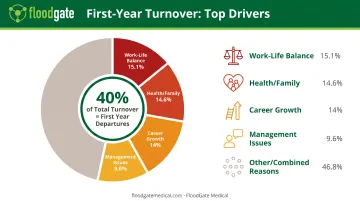
Poor retention compounds quickly. Work Institute's 2025 Retention Report found that as much as 40% of overall turnover occurs during the first year, often due to mismatched expectations, unclear role scope, or weak onboarding.
Among first-year departures in 2024, work-life balance accounted for 15.1%, health and family concerns 14.6%, and career growth issues 14%. Management-related turnover rose from 7.4% in 2022 to 9.6% in 2024.
The compounding costs of poor retention include:
- Lost productivity during notice periods and vacancy gaps
- Recruiting, onboarding, and training costs for replacement hires
- Institutional knowledge that walks out the door
- Damaged team morale and increased burden on remaining employees
- Slower product development cycles and regulatory timelines
Early attrition is often preventable. Many departures stem from fixable issues: ambiguous expectations, limited feedback, inadequate manager support, or misalignment between the role and the candidate's career goals.
Proven Employee Retention Strategies
Invest in Career Growth and Development
Career stagnation is one of the top reasons MedTech professionals leave. Career-related issues accounted for 18.9% of 2024 turnover, according to Work Institute's cross-industry data.
Support career development through:
- Formal training programs, certifications, and tuition reimbursement
- Clear advancement paths with defined milestones and skill requirements
- Mentorship programs that pair junior employees with experienced leaders
- Cross-functional project opportunities that build new capabilities
- Regular career-growth conversations separate from performance reviews
Gallup's 2025 survey of nearly 16,000 U.S. workers found that 48% of mentorship participants reported high job satisfaction, compared with just 29% of those without mentors.
FloodGate Medical's Talent Excellence Education (TEE) program provides hiring and development resources (including 14 video tutorials, interview scorecards, and onboarding templates) that help MedTech companies strengthen how they select, develop, and retain employees.
Offer Competitive, Transparent Total Rewards
Compensation alone won't retain employees, but uncompetitive pay will drive them away. Among preventable leavers, compensation and benefits made up 30% of actions that could have retained them, according to Gallup.
Build competitive total rewards by:
- Benchmarking salaries against current MedTech market data, not outdated ranges
- Offering transparent pay bands tied to role levels and performance
- Including health benefits, retirement contributions, and equity or bonuses
- Providing flexible paid time off, parental leave, and wellness stipends
FloodGate Medical's MedTech Compensation Guides provide updated salary ranges by job title and function, helping HR teams and hiring managers benchmark pay to attract and retain top performers.
Recognize Contributions Consistently
Recognition is one of the most cost-effective retention levers, and one of the most underused.
A longitudinal Gallup-Workhuman study tracking nearly 3,500 employees from 2022 to 2024 found that well-recognized employees were 45% less likely to have turned over after two years. Employees receiving high-quality recognition were 65% less likely to be actively job searching.
Effective recognition includes:
- Immediate, specific praise tied to outcomes and behaviors
- Peer-to-peer recognition programs, not just top-down feedback
- Public acknowledgment in team meetings or company communications
- Formal awards, bonuses, or spot recognition for exceptional contributions
Support Well-Being and Work Flexibility

Flexibility signals trust and helps employees manage competing demands. Work Institute's 2024 data showed that work-life balance was the leading reason for first-year turnover.
Promote well-being through:
- Flexible start times, remote-work options, or hybrid schedules where feasible
- Reasonable workloads that don't require chronic overtime
- Wellness programs, mental health resources, and employee assistance programs (EAPs)
- Generous or unlimited PTO policies that employees actually feel comfortable using
Pay is only part of the picture. FloodGate Medical's research shows that above about $100,000 in income, more compensation does not track with higher satisfaction. Culture and values outrank pay as satisfaction predictors (22% versus 12%). That is why flexibility and well-being investments often retain people more effectively than another raise.
Build Trust Through Open Communication
Gallup found that 45% of recent voluntary leavers had no proactive conversation with a manager about satisfaction, performance, or their future during the three months before departure. Many retention failures stem from lack of dialogue, not insurmountable problems.
Foster trust by:
- Scheduling regular one-on-ones focused on development, not just tasks
- Conducting stay interviews at 30, 60, and 90 days to surface concerns early
- Sharing company strategy, performance, and challenges transparently
- Acting on employee feedback and closing the loop on what changed
- Training managers to lead with empathy, not just authority
Conduct Exit Interviews to Close the Loop
Even when employees leave, their insights are valuable. Exit interviews identify recurring patterns—toxic managers, limited growth, better offers—and help you address root causes.
Make exit interviews actionable:
- Use a consistent questionnaire so data is comparable
- Conduct interviews with HR or a third party, not the departing employee's manager
- Analyze trends quarterly and share findings with leadership
- Implement changes based on feedback and communicate what you've done
The 5 C's of Recruitment and Retention
Two complementary frameworks, one for recruitment and one for retention, help you evaluate and strengthen your talent strategy.
The 5 C's of Recruitment
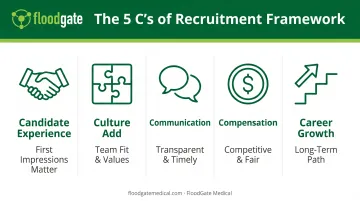
This framework identifies five pillars that drive effective hiring:
Candidate Experience: How you treat candidates from first contact through onboarding shapes their perception of your company. Positive candidate experiences improve employer-brand perception and reduce offer declines.
Culture Add (Not Culture Fit): SHRM warns that hiring for "culture fit" is exclusionary and recommends evaluating culture add: candidates who share your values but bring new perspectives and experiences.
Communication: Timely, transparent communication at every stage (application acknowledgment, interview scheduling, feedback, and offer) builds trust and differentiates you from competitors.
Compensation: Competitive pay signals that you value talent. Salary ranges in job descriptions, transparent pay bands, and market benchmarking improve offer acceptance.
Career Growth: Candidates want to know where the role leads. Clear advancement paths, skill-building opportunities, and internal mobility attract ambitious professionals.
The 5 C's of Retention
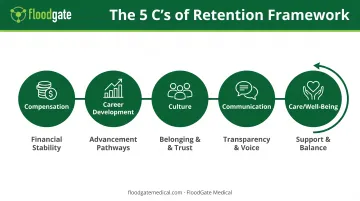
Once hired, retention depends on five complementary drivers:
Compensation: Competitive total rewards (salary, benefits, equity, and bonuses) remain important. Compensation and benefits comprised 30% of actions that could have retained preventable leavers.
Career Development: Career issues accounted for 18.9% of 2024 turnover. Employees stay where they see a future through training, mentorship, promotions, and challenging assignments.
Culture: A respectful, inclusive, mission-driven culture retains employees better than perks alone. FloodGate Medical's research shows that culture and values rank higher than compensation as satisfaction predictors.
Communication: Regular feedback, stay interviews, transparent leadership, and manager accessibility prevent small frustrations from becoming resignation reasons.
Care and Well-Being: Flexibility, reasonable workloads, wellness resources, and genuine concern for employees' lives outside work build loyalty and reduce burnout.
How a Specialized MedTech Recruiting Partner Helps
Niche Expertise Delivers Faster Access to Qualified Talent
The U.S. Bureau of Labor Statistics projects just 1,300 annual biomedical engineering openings through 2034. The 2024 Irish MedTech skills report also flags acute shortages in data analytics, automation, regulatory affairs, and software development for smart devices.
Specialized recruiting firms stay close to these small talent pools and know where to find passive candidates who aren't scanning job boards.
FloodGate Medical maintains a database of more than 150,000 MedTech professionals and places over 450 candidates annually, with an 89% one-year retention rate. Its network spans regulatory affairs, clinical applications, R&D, quality, sales, and executive leadership across healthcare device manufacturers.
DEI-Centered Recruitment Drives Innovation
Diverse teams produce better medical devices because they bring more perspectives to design, testing, and clinical application. FloodGate Medical's DEI-driven approach combines evidence-based interviewing, standardized candidate scorecards, and inclusive sourcing to help MedTech companies build teams where more voices shape innovation.
By removing bias from screening and evaluation, structured hiring practices widen candidate pools, improve quality-of-hire, and support long-term retention. Diverse employees are more likely to stay when the hiring process signals that they belong.
Ongoing Candidate Engagement Builds Relationships
Specialized recruiters nurture long-term relationships with MedTech professionals, not only open reqs. FloodGate Medical's monthly newsletter shares industry insights, career tools, job-search resources, and new opportunities so candidates stay engaged even when they aren't actively looking.
When the right role opens, those candidates already know, trust, and are ready to talk with the recruiter.
FloodGate Medical also offers the FloodGate Finder referral app. Professionals can refer qualified candidates and earn a $1,000 finder's fee after a successful hire, turning industry relationships into a scalable sourcing channel.
Beyond Placement: Talent Strategy and Development Support
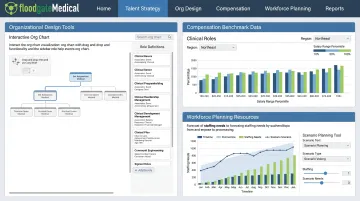
Leading MedTech recruiting partners offer more than candidate pipelines. FloodGate Medical's Talent Strategy & Advisory services cover:
- Organizational design and workforce planning
- Role definition and succession planning
- Compensation benchmarking
- Go-to-market talent planning
Talent Optimization & Development adds interview training, leadership development, "Hiring for Attitude" certification, and retention insights. Companies use that support to raise quality-of-hire and extend tenure on critical MedTech roles.
Frequently Asked Questions
What are some effective strategies for recruitment and retention?
Build a strong employer brand, post transparent job descriptions with salary ranges, and diversify sourcing channels. Deliver a fast, respectful candidate experience. Back it up with career development, competitive total rewards, consistent recognition, and open communication.
What are the 5 C's of recruitment?
The 5 C's are Candidate Experience (how you treat people throughout hiring), Culture Add (values alignment plus new perspectives), Communication (timely, transparent updates), Compensation (competitive pay and benefits), and Career Growth (clear advancement paths).
What are the 5 C's of retention?
The 5 C's are Compensation (competitive total rewards), Career Development (training, mentorship, and advancement), Culture (respectful, inclusive, mission-driven), Communication (regular feedback and transparent leadership), and Care/Well-Being (flexibility, wellness, and work-life balance).
How does DEI improve recruitment and retention outcomes?
Diverse hiring expands the candidate pool by reducing bias and reaching underrepresented talent. Diverse teams strengthen innovation, problem-solving, and healthcare outcomes. Inclusive cultures improve retention because people stay where they feel valued and heard.
Why is MedTech recruitment different from general hiring?
MedTech roles need specialized skills: regulatory knowledge (FDA, ISO 13485), cross-functional technical depth (software, hardware, biocompatibility), and clinical application experience. Talent pools are smaller, competition is intense, and hires must grasp both engineering principles and patient-safety standards.
Recruitment and retention are two stages of the same talent strategy. The candidate experience you deliver today shapes the loyalty you earn tomorrow.
Strong employer branding, diverse sourcing, transparent hiring, and real investment in growth, recognition, and well-being help MedTech companies attract the right people and keep them engaged.
Partners like FloodGate Medical help device manufacturers reach concentrated talent pools, run DEI-driven hiring, and build teams that innovate and stay. Whether you need one critical hire or a full function scaled, these strategies give you a practical roadmap.