
Contract-to-hire staffing offers a practical middle ground: access specialized talent quickly, evaluate performance in real work conditions, and convert to permanent employment only after mutual fit is confirmed. FloodGate Medical helps MedTech companies navigate this model with industry-focused, DEI-driven recruitment that connects companies with pre-vetted professionals across regulatory, clinical, sales, and commercial functions.
Key Takeaways
- Contract-to-hire cuts mis-hire risk by letting you test skills, regulatory knowledge, and cultural fit on the job
- Gain specialized MedTech talent for launches, trials, and FDA work without adding permanent headcount
- Strong results depend on clear conversion criteria, compliant agreements, and a MedTech-specialist partner rather than a generalist agency
What Is Contract-to-Hire Staffing?
Contract-to-hire, also called temporary-to-hire, is a staffing model in which a worker is employed by a staffing firm while performing work for a client during a trial period. Both parties evaluate the fit, with the possibility of converting the worker to the client's permanent payroll after the trial.
How it differs from other models:
- Direct hire: The client hires the candidate outright, with no agency-managed trial period
- Pure contract/temporary staffing: The engagement stays temporary by design, with no path to permanent employment
- Contract-to-hire: Both sides use a trial period to evaluate fit, with an option to convert if they agree
Real-World MedTech Scenario
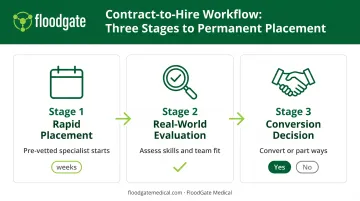
A medical device manufacturer preparing for a 510(k) submission needs a Regulatory Affairs Specialist. The role requires FDA documentation expertise, but the company has never hired this function internally and isn't certain what "good" looks like. A contract-to-hire arrangement allows the company to:
- Place a pre-vetted specialist within weeks
- Evaluate how they manage submission timelines, work with the FDA, and collaborate with R&D
- Convert them after the submission—or part ways with little disruption if the fit isn't right
That trial confirms both skills and team fit before anyone makes a permanent commitment.
Why Contract-to-Hire Works for the MedTech Industry
Faster Access to Specialized Talent
MedTech roles often demand niche expertise: regulatory affairs professionals who understand 510(k) vs. PMA pathways, clinical specialists fluent in IDE submissions, or sales reps experienced in interventional cardiology. These candidates are scarce, and traditional direct-hire searches can drag on.
Contract-to-hire accelerates placement. According to SHRM's 2025 State of Recruiting report, the median time-to-fill across industries was roughly 1.5 months. Contract roles often move faster, sometimes within weeks, because staffing agencies maintain pre-vetted candidate pools.
For MedTech companies operating under tight product timelines, the speed advantage is critical.
Reduced Hiring Risk
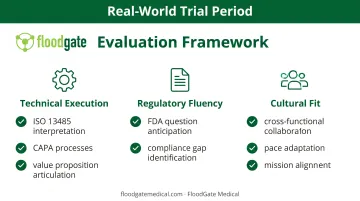
Evaluating a candidate's resume, references, and interview performance provides useful signals, but nothing compares to observing them in the actual role. Contract-to-hire lets you assess:
- Technical execution: Can they interpret ISO 13485 requirements, navigate CAPA processes, or articulate value propositions to interventional cardiologists?
- Regulatory fluency: Do they anticipate FDA questions or flag compliance gaps before they become issues?
- Cultural fit: Do they collaborate effectively with cross-functional teams, adapt to your company's pace, and align with your mission?
This real-world evaluation reduces costly mis-hires, which averaged $14,900 per occurrence in a 2017 CareerBuilder survey and affected 74% of surveyed employers.
In MedTech, a wrong hire in regulatory or quality can delay submissions or trigger non-conformances. That cost runs past salary into timelines, revenue, and reputation.
Flexibility for Scaling Teams
MedTech companies experience staffing surges tied to product-development phases:
- Clinical trials: Need additional clinical research coordinators and data managers during enrollment and monitoring
- FDA submissions: Require regulatory writers, quality specialists, and documentation support
- Product launches: Demand territory sales managers, field clinical specialists, and market access professionals
- Post-market surveillance: Need ongoing regulatory reporting and complaint-handling capacity
Contract-to-hire allows you to staff these phases without permanent headcount expansion. If the launch succeeds and the territory scales, you convert the sales rep to permanent. If the trial completes or the project winds down, the arrangement ends naturally.
Building Diverse, High-Performing Teams
A DEI-driven contract-to-hire process widens your talent pool and reduces unconscious bias during evaluation. When you source from diverse networks and judge real performance during the trial period—not only credentials or interview "culture fit" impressions—you uncover high performers who might otherwise be overlooked.
FloodGate Medical pairs MedTech specialization with an equity-focused recruitment approach. With a database of more than 150,000 MedTech professionals and more than 450 placements a year at an 89% one-year retention rate, the firm helps companies build teams whose range of perspectives strengthens product and commercial decisions.

How the Contract-to-Hire Process Works
1. Role Definition and Sourcing
The client and staffing agency define the role requirements, including technical skills, regulatory knowledge, preferred experience, and conversion criteria. The agency sources candidates from its network, targeting both active job seekers and passive candidates.
2. Contract Phase Begins
The selected candidate becomes an employee of the staffing agency during the trial period. The staffing firm handles payroll, employment taxes, benefits administration, unemployment insurance, and workers' compensation. It serves as the employer of record while the worker performs duties at the client site.
3. Ongoing Performance Evaluation
A strong contract-to-hire engagement includes:
- Defined KPIs: Clear performance metrics tied to role responsibilities (such as completing three design history files, submitting a 510(k) draft within 90 days, or hitting territory sales targets)
- Regular check-ins: Weekly or bi-weekly touchpoints between the client manager, candidate, and agency account lead
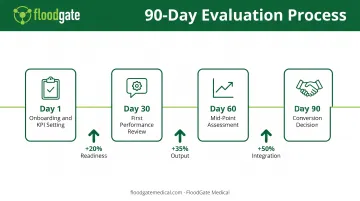
- Feedback loops: Structured reviews at 30, 60, and 90 days to assess progress and address concerns early
This structure turns the trial period into a disciplined evaluation.
4. Conversion Decision
At the end of the agreed trial period (commonly a few months to a year, depending on role complexity), both parties decide whether to convert to permanent employment. Neither party is obligated to proceed.
If conversion occurs:
- The candidate transitions from the staffing agency's payroll to the client's payroll
- Benefits and compensation may adjust based on the permanent offer
- The client typically pays a conversion fee to the staffing agency, as outlined in the initial contract
If conversion doesn't occur:
- The engagement ends with minimal disruption
- The client avoids severance complexity
- The worker seeks other opportunities, often with support from the staffing agency
Contract-to-Hire vs. Direct Hire: Which Is Right for Your MedTech Team?
| Dimension | Contract-to-Hire | Direct Hire |
|---|---|---|
| Risk level | Lower: trial period validates fit before permanent commitment | Higher: permanent from day one, with limited recourse for mis-hires |
| Speed | Faster: contract roles often fill within weeks | Slower—full search and selection process required |
| Cost structure | Agency handles payroll, taxes, and benefits during trial; conversion fee at hire | Contingency or retained fee paid at hire; client manages all employment costs from start |
| Long-term commitment | Deferred until mutual fit is confirmed | Immediate permanent headcount |
| Best for | New roles, evolving teams, project-based needs, or first hires in a specialty area | Urgent senior roles, well-defined positions, or strategic leadership hires |
When to Choose Contract-to-Hire
- You're hiring for a function you've never staffed internally (such as a first regulatory hire)
- The role is tied to a specific project phase (FDA submission, product launch, clinical trial)
- You want to evaluate technical and cultural fit before committing
- Your headcount budget is uncertain or approval is pending
When to Choose Direct Hire
- The role is a senior leadership position requiring immediate strategic impact
- You have a clear, urgent need and a well-defined job description
- You're confident in your evaluation process and want to lock in top talent quickly
- The function is core to your long-term strategy, not project-based
If the choice still feels unclear, a MedTech staffing partner can map the model to your timeline, budget certainty, and how defined the role really is.
Pros and Cons of Contract-to-Hire Staffing
Contract-to-hire gives you a structured trial before a permanent commitment. Weigh these trade-offs before you use it for MedTech roles.
Pros
- Risk mitigation: Evaluate real-world performance before you commit to a full-time hire
- Faster integration: New hires contribute immediately, shortening time-to-productivity
- Cost control during trial: The staffing agency handles payroll, taxes, and compliance during evaluation
- Better long-term fit: A longer evaluation raises the odds of successful permanent hires
- Regulatory alignment: Test specialized MedTech skills against compliance and product-timeline demands before converting
Cons
- Candidate dual-searching: Strong candidates may keep interviewing and take a permanent offer elsewhere
- Integration challenges: Contractors treated as outsiders can disengage and hurt team morale
- Legal and compliance risks: Misclassification, joint-employer duties, and wage-and-hour rules need tight oversight
- Conversion uncertainty: Candidates who want immediate permanent roles may decline contract-to-hire offers
Mitigating the Downsides
Partner with a MedTech-focused staffing agency that:
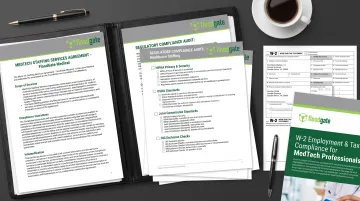
- Maintains compliant W-2 employment agreements and proper classification
- Provides clear contract terms, including conversion timelines and criteria
- Supports equitable treatment of contract workers to preserve engagement
- Offers deep regulatory and technical expertise in MedTech hiring
FloodGate Medical provides compliance and payroll support, specialized MedTech candidate networks, and advisory services that address these risks directly.
Best Practices for a Successful Contract-to-Hire Engagement
Set Clear Expectations Upfront
- Define conversion criteria in writing: What performance, milestones, or outcomes trigger a permanent offer?
- Establish a timeline: How long is the trial period, and when will conversion be decided?
- Clarify compensation: Will salary or benefits change at conversion, and how will you communicate that before the trial ends?
Partner with a MedTech-Specialized Staffing Firm
Generalist agencies lack the technical and regulatory fluency required for MedTech roles. A specialized partner understands:
- FDA pathways (510(k), PMA, De Novo)
- Quality system regulations (ISO 13485, 21 CFR Part 820)
- Clinical trial protocols and IDE submissions
- Territory sales dynamics in interventional cardiology, orthopedics, or other device specialties
FloodGate Medical focuses exclusively on MedTech recruiting, so candidates and hiring managers already share that regulatory and commercial context. The firm brings more than 25 years of industry experience, access to over 150,000 MedTech professionals, and a DEI-driven methodology that reduces bias and expands who gets considered.
Maintain Open Communication and Equitable Treatment
Treat contract workers as integral team members:
- Include them in team meetings, strategy discussions, and company events
- Provide the same resources, tools, and access as permanent employees
- Offer regular feedback and recognize contributions publicly
- Clarify their path to conversion, so they understand what success looks like
This approach supports morale, reduces turnover risk, and increases the likelihood that top performers will accept your permanent offer.
Frequently Asked Questions
What is the difference between contract-to-hire and temp-to-hire?
These terms are typically used interchangeably in staffing contexts. Both describe a trial employment period through a staffing agency with the possibility of permanent conversion. The American Staffing Association formally uses "temporary to hire."
How long does a typical contract-to-hire period last?
Contract-to-hire durations generally range from a few months to a year, depending on role complexity, project timelines, and the time needed to evaluate fit. Regulatory and clinical roles often require longer trials than commercial or administrative positions.
Do contract-to-hire employees receive benefits?
Benefits during the contract phase are usually limited and provided by the staffing agency, not the client company. After conversion, the employee moves onto the client's full benefits package, including health coverage, retirement contributions, and paid time off.
Can a company or employee end a contract-to-hire arrangement early?
Most agreements include termination clauses allowing either party to exit with notice. Early exits happen when performance falls short, the candidate takes another offer, or business needs change.
Is contract-to-hire a good fit for specialized MedTech roles?
Yes. Contract-to-hire is especially useful for validating technical expertise (such as FDA submission knowledge or clinical trial management) and cultural fit before a permanent commitment. That trial period lowers the risk of costly mis-hires in compliance-critical roles.
How do I choose the right staffing partner for contract-to-hire in MedTech?
Choose a partner with proven MedTech expertise, rigorous candidate screening, and strong placement retention. FloodGate Medical focuses exclusively on MedTech, draws from a network of over 150,000 industry professionals, and uses a DEI-centered process to improve outcomes for both companies and candidates.