Sponsors and CROs write Medical Monitor responsibilities into SOPs all the time. But the real test isn't the job description. It's whether a safety signal gets caught in hours instead of weeks, and whether a site can get a straight medical answer when a patient's status changes mid-visit.
This article breaks down what Medical Monitors actually do, where their value shows up operationally, and why finding the right physician for this role has become its own challenge.
TL;DR
- A Medical Monitor is an independent physician overseeing trial safety, distinct from the PI, CRA, or DSMB
- Key operational wins: faster safety signal detection, fewer protocol amendments, and quicker query resolution
- Under-resourced medical monitoring often shows up in FDA warning letters, inspection findings, and stalled enrollment
- Sourcing qualified physician monitors is hard right now, making recruiting strategy essential to trial planning
What Is a Medical Monitor
A Medical Monitor is a licensed physician who provides independent, cross-site clinical oversight on behalf of the sponsor or CRO throughout a trial. ICH E6(R3) doesn't actually use that job title.
Instead, it states that sponsors "should have medical personnel readily available" to advise on trial-related medical questions. The Medical Monitor role has emerged as the practical answer to that requirement.
It's easy to confuse this role with others on a trial team. Here's how they differ:
| Role | Scope | Reports To |
|---|---|---|
| Medical Monitor | Physician oversight across all sites | Sponsor or CRO |
| Principal Investigator | Clinical decisions at a single site | Site, under sponsor protocol |
| CRA | Compliance, data quality, GCP adherence | Sponsor or CRO |
| DSMB/DMC | Independent periodic review of accumulating data | Its own charter, not the sponsor |
The distinction matters. A PI answers for the patients in front of them, a CRA checks that data follows the protocol, and a DSMB weighs in only periodically, under its own independence rules.
The Medical Monitor works differently: this physician tracks safety and clinical judgment continuously, across every site, from first patient in to last patient out. In practice, that means:
- Reviews adverse events and safety signals as they emerge across sites
- Advises investigators on eligibility questions and protocol deviations
- Escalates concerns to the sponsor before they become preventable harm
Done well, the role goes far beyond a compliance checkbox, applying active clinical judgment in real time.
Key Advantages of Medical Monitors in Clinical Trials
These advantages tie directly to metrics sponsors already track: SAE resolution time, protocol deviation rates, query turnaround, and inspection findings. They also compound. A trial with more sites, more complexity, or more regulatory scrutiny gets exponentially more value from having a physician actively managing risk, not just documenting it after the fact.
Real-Time Safety Oversight and Risk-Benefit Decision-Making
Medical Monitors review accumulating SAE data, lab and vital trends, and SUSARs as they come in, not in a quarterly batch. In practice, this means being on call for urgent site questions, participating in safety review meetings, and coordinating dose holds or adjustments with pharmacovigilance and biostatistics teams in real time.
Why this matters:
- Faster signal detection reduces harm to trial participants and helps sponsors avoid last-minute, costly holds
- A Tufts-led analysis of 198 trials found a mean of 104.3 protocol deviations per trial, with Phase III studies averaging 119; a physician actively reviewing safety data can often catch these before they compound
- Consistent oversight builds a stronger audit trail, which matters enormously during FDA or EMA inspections
KPIs impacted: SAE resolution time, protocol deviation rate, participant safety incident rate.
First-in-human studies, oncology trials, and complex dose-escalation designs leave little margin for error, which is why real-time oversight pays off most there.
Protocol Design and Clinical Guidance Across the Trial Lifecycle
Medical Monitors shape eligibility criteria, safety endpoints, stopping rules, and Investigator's Brochure alignment starting at study start-up. They review the Safety Management Plan, train investigators and CRAs on protocol nuances, and ensure narrative consistency between site data and the Clinical Study Report at close-out.
Well-vetted protocols reduce mid-study amendments, one of the biggest drivers of budget and timeline overruns. A Tufts CSDD study of 836 protocols found that 57% required at least one substantial amendment, and sponsors judged roughly 45% of those avoidable. The costs are steep:
- $141,000 median direct cost per substantial Phase II amendment
- $535,000 median direct cost per substantial Phase III amendment
- An average of 3 additional unplanned months added to studies with at least one substantial amendment
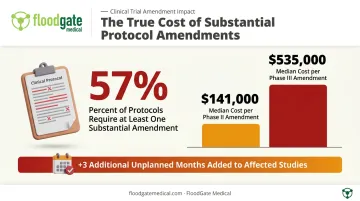
That data comes from Tufts CSDD's analysis of protocol amendment cycle time and cost. A physician reviewing eligibility criteria and endpoints before finalization is one of the few interventions that can catch these issues before they become expensive.
KPIs impacted: number of protocol amendments, site query volume, regulatory submission timelines.
Multi-site global trials, novel modalities such as cell and gene therapy, and adaptive or platform designs tend to see the most protocol drift, making this upfront review especially valuable.
Cross-Functional Coordination and Rapid Site Support
When a site question exceeds what a CRA can answer, it goes to the Medical Monitor. That's the daily rhythm: fielding clinical questions from sites, collaborating with data managers and medical writers, and staying aligned with the sponsor's medical lead on anything that touches patient safety or protocol interpretation.
Faster, consistent query resolution keeps enrollment and data cleaning on schedule. SCDM's guidance on data management metrics defines query turnaround as the calendar days from generation to site response, and stresses that unresolved safety queries directly delay database lock readiness. A Medical Monitor who responds quickly prevents that bottleneck from forming in the first place.
KPIs impacted: query turnaround time, site retention and satisfaction, data query rates.
Large multi-site or decentralized trials, sites staffed with less experienced coordinators, and high-enrollment studies can generate query volumes that overwhelm a CRA-only structure, which is exactly when this kind of coordination becomes essential.
What Happens When Medical Monitoring Is Missing or Ignored
FDA requires sponsors to ensure proper monitoring under 21 CFR 312.50 and 312.56 for drugs and biologics. When that oversight is thin or absent, the consequences show up fast and they show up in inspection findings.
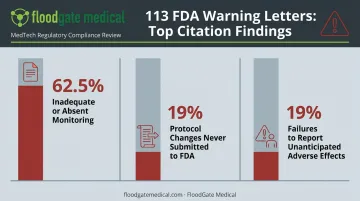
A 2015 review of 113 FDA Warning Letters issued between FY2008 and FY2012 found that among sponsor-investigator letters, 62.5% cited inadequate or absent monitoring.
Nearly 19% flagged protocol changes never submitted to FDA, and another 19% noted failures to report unanticipated adverse effects, according to research published on sponsor-investigator warning letters.
Common consequences of under-resourced medical monitoring include:
- Inconsistent safety assessments across sites and delayed SAE response times
- Rising protocol deviations and more findings during regulatory inspections
- Slower site query resolution, which contributes to enrollment delays and rising trial costs
- A weaker, less defensible decision trail heading into close-out and inspection
None of this means every gap traces directly back to a missing Medical Monitor. But the pattern is consistent: sponsors without strong physician-level oversight end up documenting problems instead of preventing them.
How to Get the Most Value from Medical Monitors
Value from a Medical Monitor isn't automatic. It depends on engaging the right physician early, matching them to the trial's actual complexity, and scoping the role clearly before the study starts.
Match qualifications to the trial. Look for a licensed physician with relevant therapeutic-area background, solid GCP knowledge, pharmacovigilance familiarity, and genuine comfort making calls under uncertainty. A generalist can miss signals that a therapeutically-aligned physician would catch immediately.
Define availability up front. Escalation pathways and on-call coverage expectations belong in the Safety Management Plan, not worked out informally after a site calls with an urgent question at 9pm.
Treat monitoring as ongoing, not archival. Safety data should be reviewed on a regular cadence and acted on, not simply logged for the record.
The Talent Challenge Sponsors Can't Ignore
Here's the part that doesn't get discussed enough: finding a qualified Medical Monitor is genuinely hard. The pool of physicians who combine clinical credibility, GCP fluency, and deep therapeutic-area experience is narrow, especially in oncology or cell and gene therapy, and demand for that combination keeps growing as trials get more complex.
This is where a specialized recruiting partner earns its keep. FloodGate Medical works exclusively within MedTech and clinical research, drawing from an extensive, actively cultivated network of vetted professionals across the industry. That specialization matters when a sponsor needs a physician who understands both GCP requirements and the therapeutic nuances of, say, a cell therapy program.
- FloodGate Medical's recruiters build candidate relationships proactively, before a specific opening exists, rather than starting from zero when a role opens
- Their process defines both technical qualifications and cultural fit up front, which reduces mismatches down the line
- A DEI-driven approach to sourcing widens the qualified candidate pool rather than narrowing it

For sponsors and CROs, partnering with a firm that lives in this space day-to-day typically cuts time-to-fill compared to running an in-house search for a role this specialized.
Conclusion
A Medical Monitor brings control and clarity to safety oversight, from first patient enrolled to last database locked. That oversight translates into faster signal detection, fewer amendments, and quicker query resolution as trials scale. Leave the role vacant, or fill it with someone lacking the right therapeutic depth, and those gains disappear fast.
That risk makes finding and retaining qualified Medical Monitoring talent just as critical as the function itself. Partnering with a MedTech-focused recruiting firm like FloodGate Medical closes that gap before it costs you the trial.
Frequently Asked Questions
Is a Medical Monitor required on every clinical trial?
Safety oversight is required on all interventional trials, but its exact form scales with risk and phase. Most sponsors appoint a dedicated Medical Monitor for higher-risk, early-phase, or complex studies.
What is the difference between a Medical Monitor and a Principal Investigator?
The PI is accountable for trial conduct and patient care at a single site. The Medical Monitor provides physician-level oversight across all sites on behalf of the sponsor or CRO.
What qualifications should a Medical Monitor have?
A Medical Monitor is typically a licensed physician with relevant therapeutic experience, strong GCP knowledge, and familiarity with pharmacovigilance and biostatistics. Therapeutic-area alignment matters more as trial complexity increases.
Does the Medical Monitor chair the DSMB?
No. DSMBs and safety monitoring committees operate independently under their own charter. The Medical Monitor may present information to the board but doesn't sit on or chair it.
Is the Medical Monitor on call 24/7?
Many programs require rapid access for urgent safety queries, but exact coverage terms are defined in the Safety Management Plan or contract rather than a universal standard.
How can companies find and hire qualified Medical Monitors?
Demand for experienced, therapeutically-aligned physician monitors often outpaces supply. Working with a specialized MedTech recruiting partner like FloodGate Medical can speed access to qualified, diverse candidates.