Introduction: The Hidden Cost of Misaligned Teams
A 2018 Panopto workplace-knowledge study found that U.S. knowledge workers lost 5.3 hours per week—roughly 34 working days a year—waiting for information or recreating knowledge that already existed.
In MedTech, collaboration across R&D, regulatory affairs, clinical operations, and commercial teams is essential. Those same delays compound into missed launches, regulatory bottlenecks, and burned-out talent.
High-performing teams don't happen by accident. They need clear structure, shared norms, and ongoing measurement.
Team diagnostic assessments turn vague feelings about "how we work together" into measurable insights leaders can act on. Used well, they surface hidden friction: decision bottlenecks, fuzzy role boundaries, and communication gaps that quietly drain productivity.
This article explores how MedTech leaders can select, implement, and leverage scientifically validated team diagnostic frameworks to build teams that deliver measurable performance gains.
Key Takeaways
- Measure group dynamics and structural conditions—not rolled-up personality scores
- Require peer-reviewed frameworks, reliability (α ≥ 0.70), and proven predictive outcomes
- Match the tool to the pain point: 6 Conditions, CliftonStrengths, DiSC, or Five Dysfunctions
- Invest more in design, clarity, and commitment than in survey administration alone
- Re-diagnose after interventions and major team changes—not on a fixed annual calendar
What Is a Team Diagnostic Assessment?
A team diagnostic assessment is a structured evaluation tool that measures team effectiveness as a system. It examines how well a team is designed and functioning across multiple dimensions such as purpose clarity, role definition, communication patterns, decision-making processes, and external support.
Team diagnostics differ from individual assessments like MBTI or personality tests. While individual tools profile personal preferences or traits, true team-level diagnostics capture:
- Group dynamics – how members interact, resolve conflict, and make decisions collectively
- Structural conditions – whether the team has clear goals, appropriate composition, and enabling resources
- Process effectiveness – how work gets coordinated, information flows, and accountability operates
- Contextual support – whether the broader organization provides the coaching, resources, and rewards the team needs
Typical components include:
- Quantitative surveys measuring specific effectiveness dimensions
- Qualitative feedback capturing how team members experience day-to-day work
- Behavioral observation frameworks that track meeting dynamics or decision patterns
- Comparative benchmarking against validated standards from high-performing teams
The focus is not personality mix. It is whether the team is set up to succeed—and where structural or process gaps stand in the way.
The Business Case: Why Team Diagnostics Matter in 2025
The cost of poor teamwork is measurable and substantial. Organizations also lose productivity to collaboration failures that team diagnostics are built to catch: unclear accountability, duplicated effort, misaligned priorities, and unresolved interpersonal friction.
Team diagnostics surface invisible friction points:
- Decision bottlenecks – Who has authority? Where do approvals stall?
- Unclear role boundaries – Are responsibilities overlapping or falling into gaps?
- Communication gaps – Is critical information reaching the right people at the right time?
- Misaligned goals – Do team members share a common definition of success?
The research case for intervening is strong. A 2013 meta-analysis by Tannenbaum and Cerasoli (46 samples, 2,136 participants) found that properly conducted team debriefs improved effectiveness by about 25% (standardized effect d = 0.67). A 2017 systematic review separately reported medium-to-large effects for controlled teamwork interventions on both teamwork quality and performance.
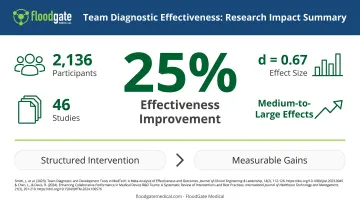
Structured interventions anchored in diagnostic data can produce measurable performance and innovation gains. Results still hinge on intervention quality, organizational context, and sustained follow-through—not on the assessment tool alone.
Criteria for Selecting Effective Team Assessment Tools
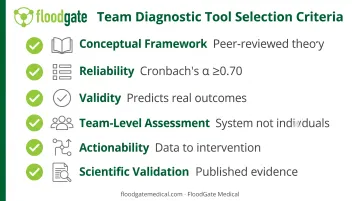
MedTech leaders choosing a team diagnostic need a clear filter: six evidence-based criteria separate scientifically validated tools from generic surveys.
Conceptual Framework and Theory of Change
The assessment must be grounded in a peer-reviewed theory of team effectiveness, not a loose list of "best practices" or consultant heuristics.
A strong framework defines team effectiveness, names the conditions that drive it, and predicts how gains on those factors improve outcomes. Without that foundation, you measure activity, not effectiveness.
Confirm the tool offers:
- Published research articles describing the model's development
- Clear causal logic connecting assessed conditions to team performance
- Evidence that the framework has been tested across diverse team types and industries
Reliability: Consistency of Measurement
Reliability means the tool produces consistent results when measuring the same team dynamics under similar conditions. Without it, you cannot track change over time—random score swings make intervention planning guesswork.
Check for:
- Internal consistency (Cronbach's alpha ≥0.70 for each scale)
- Test-retest reliability (scores stay stable when conditions have not changed)
Validity: Does It Measure What It Claims?
Validity asks whether the tool actually captures team effectiveness factors and predicts real-world outcomes.
Verify both:
- Construct validity: Does the instrument measure the constructs it claims, such as psychological safety or goal clarity?
- Predictive validity: Do higher scores correlate with better team performance, innovation, or other success metrics?
Insist on published validation studies where scores predict team outcomes in field settings, not only lab experiments or theoretical models.
Team-Level vs. Individual-Level Assessment
Effective team diagnostics measure the team as a system, not aggregated individual traits.
Personality profiles show what types of people you have. Team diagnostics show whether the group has the structure, processes, and support to succeed.
Favor tools that assess:
- Shared team goals and purpose
- Role interdependencies and coordination mechanisms
- Group norms and decision-making processes
- Organizational support and resources available to the team
Aggregating individual personality scores does not produce a valid team diagnosis.
Actionability: From Data to Intervention
The best diagnostics go beyond scores. They translate findings into specific, prioritized improvement actions.
Strong reports include:
- Clear identification of strengths to leverage and gaps to close
- Prioritization logic (which issues matter most?)
- Concrete intervention recommendations tied to each gap
- Implementation frameworks, coaching protocols, or facilitation guides
Red flag: Tools that deliver a score dashboard with no guidance on what to do next leave teams stranded with data but no roadmap.
Scientific Validation: Research Backing Matters
Require published, peer-reviewed evidence. Look for:
- Studies in reputable journals (Journal of Applied Psychology, Organization Science, Group & Organization Management)
- Sample sizes large enough to support generalization (hundreds of teams, not dozens)
- Replication across industries and team types
- Transparent reporting of reliability coefficients, effect sizes, and limitations
Vendor-commissioned white papers are not substitutes for independent academic validation.
Leading Team Diagnostic Frameworks and Tools
The 6 Conditions Model and Team Diagnostic Survey (TDS)
Framework: Developed by researchers Ruth Wageman, J. Richard Hackman, and Erin Lehman, the 6 Conditions Model identifies six structural and contextual factors that predict team effectiveness:
- Real Team – stable membership, clear boundaries
- Compelling Purpose – clear, challenging, consequential goals
- Right People – skills, diversity, and size matched to the task
- Sound Structure – task design, norms, and strategies that enable coordination
- Supportive Context – rewards, information, resources, and education
- Team Coaching – help with effort, strategy, and knowledge/skill development
Validation evidence: The original 2005 development study analyzed 2,474 members across 321 teams in diverse industries. In a study of 127 top leadership teams worldwide, the six conditions predicted more than 50% of variance in team effectiveness.
In a separate 2011 study of 64 intelligence-analysis teams, TDS scores explained 74% of variance in effectiveness outcomes.
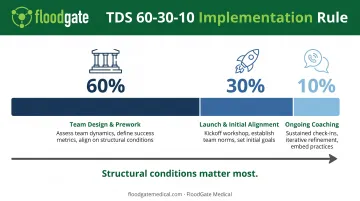
Implementation insight: TDS advocates a 60-30-10 rule—60% of effort invested in team design and prework, 30% in launch and initial alignment, and 10% in ongoing coaching. This reflects the research finding that structural conditions set at team formation matter more than post-hoc interventions.
Best use case: Leadership teams, cross-functional project teams, and newly formed teams where structural design choices will set the foundation for long-term performance.
CliftonStrengths for Teams
Framework: CliftonStrengths (formerly StrengthsFinder) identifies 34 individual talent themes and maps them to reveal team composition: where talents cluster, where gaps exist, and how to use natural strengths.
Validation evidence: Gallup reports that in a study of 530 work units with productivity data, teams whose managers received strengths feedback showed 12.5% greater post-intervention productivity compared to control units.
Key insight: This tool starts at the individual level but aggregates to reveal team-level patterns. It answers: Do we have the right mix of talents? Are people in roles that play to their strengths?
Best use case: Teams needing to clarify role fit, optimize task assignments, or build mutual understanding of how each member naturally contributes.
Note: The evidence supports manager strengths feedback as the intervention, not daily team discussion of strengths, though Gallup materials reference both practices.
Everything DiSC for Teams
Framework: DiSC categorizes behavioral styles across four dimensions (Dominance, Influence, Steadiness, Conscientiousness) and maps team members' communication and decision-making preferences.
Adoption and satisfaction: Wiley, the publisher, reports 10 million learners, 150,000+ organizations, and a 97% global satisfaction rating. These figures describe reach and self-reported satisfaction, not independently audited effectiveness.
Application: DiSC reveals interpersonal dynamics: where communication styles clash, how team members prefer to receive information, and which decision-making approaches feel natural versus uncomfortable to different members.
Best use case: Cross-functional teams experiencing interpersonal friction, communication breakdowns, or slow decision-making due to style mismatches.
Limitation: DiSC measures individual behavioral preferences; it does not directly assess team-level structural conditions or performance predictors.
Patrick Lencioni's Five Dysfunctions of a Team Assessment
Framework: Lencioni's model diagnoses five progressive dysfunctions that prevent team cohesion:
- Absence of Trust – fear of vulnerability prevents open, honest interaction
- Fear of Conflict – artificial harmony suppresses productive ideological debate
- Lack of Commitment – ambiguity and lack of buy-in undermine decisions
- Avoidance of Accountability – interpersonal discomfort prevents peer accountability
- Inattention to Results – individual goals or status displace collective success
Assessment approach: The tool diagnoses which dysfunction is most acute and provides targeted interventions to address the root barrier.
Best use case: Leadership teams experiencing persistent dysfunction, lack of trust, or avoidance of difficult conversations. Particularly effective when conflict avoidance or accountability gaps are visible symptoms.
Strength: Simple, intuitive model that resonates with leaders and creates shared language for addressing dysfunction.
Selecting the Right Tool for Your Context
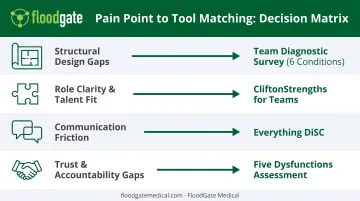
Decision framework:
| Primary Pain Point | Recommended Tool |
|---|---|
| Structural design gaps (unclear goals, poor task design, lack of resources) | Team Diagnostic Survey (6 Conditions) |
| Role clarity and talent optimization | CliftonStrengths for Teams |
| Communication friction and style clashes | Everything DiSC |
| Trust deficits, conflict avoidance, accountability gaps | Five Dysfunctions Assessment |
Additional considerations:
- Team maturity: Forming teams benefit most from structural diagnostics (TDS); performing teams may need interpersonal tools (DiSC, Five Dysfunctions)
- Implementation timeline: DiSC and CliftonStrengths can be administered and debriefed quickly; TDS requires more design investment upfront
- Organizational readiness: Five Dysfunctions demands psychological safety and leadership willingness to surface uncomfortable truths
How to Implement a Team Diagnostic Process
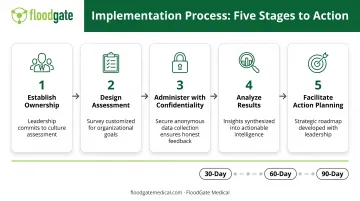
A team diagnostic works when you run it as a managed change process, not a one-off survey. Move through five stages—from leadership buy-in to 90-day action tracking—so results turn into owned improvements.
Establish Ownership and Secure Leadership Buy-In
Designate a core team (HR, organizational development, or the team leader) to manage the diagnostic process from planning through follow-up.
Secure senior leadership commitment by framing the diagnostic as a strategic investment, not an HR survey. Communicate:
- Why now? What business outcome or pain point makes this urgent?
- What's at stake? Connect team effectiveness to organizational goals (product launch timelines, regulatory compliance, revenue targets)
- What will participants experience? Set clear expectations about time investment, confidentiality, and follow-up
If leaders treat the diagnostic as optional or perfunctory, participation and honesty will suffer.
Design and Customize the Assessment
Select the diagnostic tool aligned with your team's primary pain point and organizational context (see decision framework above).
Customize questions to reflect your organization's language, structure, and specific challenges:
- Adapt role terminology (such as "product manager" vs. "program lead")
- Reference actual team goals or deliverables
- Include context-specific questions about cross-functional dependencies or regulatory constraints in MedTech settings
Avoid over-customization: Modifying validated instruments can compromise reliability and eliminate benchmarking capability.
Administer the Diagnostic with Confidentiality
Distribution logistics:
- Use a secure online platform
- Provide clear instructions and a realistic deadline (typically 7-10 days)
- Send reminders to non-responders without creating pressure
Emphasize confidentiality:
- Individual responses will not be attributable
- Only aggregated team-level data will be shared
- No one will be singled out or penalized based on feedback
Response-rate target: Aim for 80%+ participation to ensure data validity and team buy-in.
Analyze Results and Identify Patterns
Data analysis steps:
- Calculate average scores across assessed dimensions (purpose clarity, role definition, communication effectiveness, etc.)
- Identify strengths (dimensions scoring in the top quartile or above benchmark)
- Spot gaps (dimensions scoring significantly below benchmark or showing high variability)
- Disaggregate by subgroup if sample size permits (such as tenured vs. new members or functional backgrounds) to surface disparities in experience
Pattern recognition: Look for clusters of related issues. For example:
- Low scores on both "goal clarity" and "accountability" suggest misalignment cascading into execution gaps
- High "trust" but low "conflict" scores may indicate artificial harmony rather than genuine cohesion
Facilitate Reflection Sessions and Co-Create Action Plans
Host a team debrief (2-3 hours) to:
- Review findings – present aggregated data, celebrate strengths, explore gaps
- Diagnose root causes – facilitate discussion of why gaps exist, not just what scores revealed
- Co-develop action targets – select 2-3 specific, measurable improvement goals with clear ownership
Action-plan structure:
- 30-day milestone: Quick wins to build momentum (such as clarifying decision rights or establishing weekly check-ins)
- 60-day milestone: Process or structural changes (such as redesigning meeting cadence or revising role definitions)
- 90-day milestone: Behavioral or cultural shifts (such as norms for productive conflict or peer accountability)
Establish regular check-ins:
- Pulse surveys (monthly or quarterly) to track progress
- Progress reviews at team meetings to maintain visibility and accountability
Frequently Asked Questions
What is a team diagnostic assessment?
A team diagnostic assessment is a structured survey that measures how well a team is designed and working. It typically covers purpose clarity, roles, communication, decision-making, and organizational support, then turns those scores into targeted improvement priorities.
What are some examples of team diagnostic assessments?
Examples include the Team Diagnostic Survey (TDS) based on the 6 Conditions Model, CliftonStrengths for Teams, Everything DiSC for Teams, and Patrick Lencioni's Five Dysfunctions of a Team assessment. Selection depends on whether your primary need is structural design, role optimization, communication, or trust-building.
What are the 5 C's of high-performing teams used in team diagnostic assessments?
One common version is Coordination, Communication, Cohesion, Coaching, and Conditions. For stronger research backing, many practitioners prefer the 6 Conditions Model: Real Team, Compelling Purpose, Right People, Sound Structure, Supportive Context, and Team Coaching.
What is the 'Five Dysfunctions of a Team' questionnaire in team diagnostic assessments?
It is Patrick Lencioni's assessment of five progressive barriers: Absence of Trust, Fear of Conflict, Lack of Commitment, Avoidance of Accountability, and Inattention to Results. Results show which dysfunction is most acute so you can target interventions there first.
How often should teams conduct diagnostic assessments?
Run a baseline diagnostic for new teams, then follow up after enough time to act on the results, typically 6–9 months later. Reassess after major changes (new leader, role shifts, strategic pivot) or when performance plateaus point to fresh friction.
What makes a team diagnostic scientifically valid?
A valid diagnostic rests on peer-reviewed research, reliable measurement (Cronbach's alpha ≥0.70 and stable test-retest results), and predictive validity. Scores should correlate with real team performance in field studies, not only with a theoretical model.
For MedTech organizations building high-performing teams: Diagnostics replace gut feel with data you can act on. Frameworks such as the 6 Conditions Model, DiSC, and CliftonStrengths each surface different friction points so you can align goals and improve how the team works together.
FloodGate Medical partners with MedTech companies on talent acquisition, organizational design, and workforce planning. Diagnostics measure the gaps; lasting performance still depends on the right people in the right roles, with clear structure and ongoing development.
If you are ready to turn those insights into hiring, role design, or leadership development, FloodGate can help.