
Introduction
Search "clinical advisor jobs" and you'll get postings that look nothing alike. One wants a licensed pharmacist reviewing formularies. Another wants an RN managing care transitions. A third wants someone with device experience training field teams.
That's the problem. "Clinical advisor" isn't a standardized job title. It's an umbrella term that health plans, MedTech companies, pharmacy benefit managers, and provider systems each define differently.
There's no dedicated occupational category from the Bureau of Labor Statistics. Instead, the role gets shaped entirely by the employer, the license required, and the business problem it solves.
If you're a clinician wondering whether this career path fits your background, you're not alone. This guide breaks down what clinical advisors actually do, the qualifications employers look for, and the steps to land the role, with a specific focus on how it plays out in MedTech.
Key Takeaways
- Clinical advisor roles combine hands-on clinical expertise with business, regulatory, or care-strategy guidance
- Most postings require an active license (RN, PharmD, LCSW) plus 3+ years of clinical experience
- Certifications like CCM or CPHQ can strengthen a candidacy, but none are universally required
- Pay varies by specialty and seniority — 2026 postings range from $86,000 to over $228,000
- MedTech employers increasingly value advisors who pair clinical credibility with device fluency
What Is a Clinical Advisor?
A clinical advisor applies licensed clinical judgment to a business, regulatory, or patient-care decision. That's the throughline across every version of this job. Beyond that, the responsibilities depend heavily on the industry.
Real postings show just how much scope varies:
- CVS Health uses "Clinical Advisor" for pharmacists who manage client formularies and benefit-plan design, requiring an active pharmacist license and managed-care expertise
- Elevance Health's Licensed Clinical Care Advisor role centers on behavioral-health assessments, care planning, and medication reconciliation for members in care transitions
- Terumo Medical lists a Sr. Field Clinical Advisor title tied to device training and field support
Core Responsibilities You'll Commonly See
Despite the variation, several duties show up repeatedly across postings:
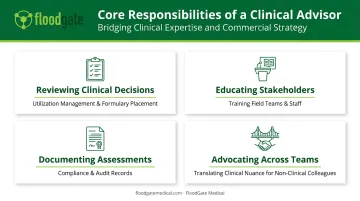
- Reviewing clinical decisions: utilization management, formulary placement, or care-plan appropriateness
- Educating stakeholders: training field teams, members, or internal staff on clinical protocols
- Documenting assessments: maintaining records that satisfy compliance or accreditation standards
- Advocating across teams: translating clinical nuance for non-clinical colleagues in sales, operations, or product
That advocacy piece matters more than most job seekers realize. A clinical advisor often sits between a patient or member, a clinical team, and a business stakeholder who needs a plain-language recommendation, not a chart note.
Clinical Advisor vs. Similar Roles
The title overlaps with several adjacent roles, and the differences come down to scope and reporting structure.
| Role | Primary Focus | Typical Employer |
|---|---|---|
| Clinical Advisor | Formulary rules, care transitions, or field clinical support (employer-defined) | Health plans, PBMs, some MedTech firms |
| Medical Science Liaison | Scientific exchange with external experts in a therapeutic area | Pharma, biotech, device manufacturers |
| Clinical Consultant | Product implementation, adoption, workflow training | Health tech, MedTech, provider systems |
| Case Manager | Coordinating services for individual patients/members | Health plans, hospitals, rehab facilities |
In MedTech specifically, clinical advisors often support product development, field training, and market access. That combination of clinical credibility and device fluency is a narrow skill set. It's exactly why companies work with specialized recruiters like FloodGate Medical, which focuses exclusively on MedTech talent and understands how to evaluate candidates who bridge both worlds.
Skills and Qualifications You Need
Most job postings converge on the same core requirements: verified licensure, hands-on experience, and the ability to work across clinical and business teams.
Licensure and Experience
Every verified posting anchors to a specific clinical license, not a generic "clinical background":
- Pharmacist license — required for CVS's Clinical Advisor roles working on formulary and benefit design
- RN, LCSW, LMHC, LPC, or LMFT — accepted for Elevance's behavioral-health advisor roles (associate-level licenses don't qualify)
- 3 years minimum — the baseline for most non-senior roles; a managed-care residency can sometimes substitute
- 5+ years — the bar for senior positions, such as Humana's Senior Pharmacy Clinical Advisor role
Certifications Worth Pursuing
Licensure sets the floor, but certifications can help a candidate stand out. No single credential is universally required, though several show up often enough to matter:
- CCM (Certified Case Manager) — strongest fit for care-coordination and transition-focused roles
- CPHQ (Certified Professional in Healthcare Quality) — relevant for compliance and accreditation-heavy positions
- CMQ/OE (ASQ) — signals senior-level process leadership, though it's not a clinical license
- PTCB/CPhT — applies to pharmacy-technician tracks, not pharmacist-level advisor roles
Technical and Soft Skills
Credentials aside, most postings also list a practical skill set employers expect from day one:
- Proficiency with EMR systems and clinical documentation software
- Excel fluency, with SQL or Crystal Reports familiarity for data-heavy roles
- Cross-functional collaboration across clinical, compliance, and business teams
- The ability to translate clinical findings into recommendations non-clinicians can act on
At higher seniority levels, therapeutic area specialization becomes a genuine differentiator. Oncology, rare disease, or chronic disease management expertise can move a candidate into a materially higher pay band.
How to Become a Clinical Advisor: Step-by-Step
There's no single accredited path into this role, but the postings we reviewed point to a consistent sequence.
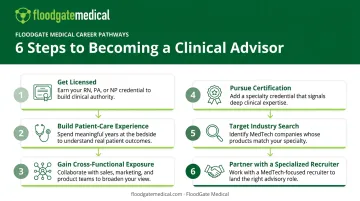
- Get licensed in your clinical field. Nursing, pharmacy, medicine, social work, or behavioral health — the license comes first, always.
- Build direct patient-care experience. Most employers want 3+ years of hands-on care, case management, or utilization review before considering you for an advisory seat.
- Get exposure to cross-functional work. Volunteer for quality committees, compliance projects, or formulary reviews. This is where you start proving you can think beyond bedside care.
- Pursue a relevant certification. CCM or CPHQ won't replace your license, but they signal commitment to the advisory track.
- Target your search by industry. A health-plan advisor role and a MedTech advisor role need different resume framing. MedTech jobs have grown at three times the pace of U.S. manufacturing since 2018, with average salaries near $97,000.
- Work with a specialized recruiter if you're transitioning from clinical practice. This step is often skipped, though it matters most: reframing clinical experience in commercial terms takes guidance. Firms like FloodGate Medical specialize in MedTech placements and offer career coaching for candidates making this pivot.
Clinical Advisor Salary and Career Outlook
Because the title spans so many sectors, salary comparisons only make sense when you look at specific postings rather than broad averages.
Two verified 2026 examples illustrate the spread:
| Employer | Role | Base Salary Range |
|---|---|---|
| Humana | Senior Pharmacy Clinical Advisor | $86,300–$118,700 |
| CVS Health | Clinical Advisor – Oncology & Rare Disease Products (BCOP) | $135,575–$228,800 |
That's a $140,000 gap between two "clinical advisor" titles at two different companies. The difference comes down to a few factors:
- Specialty certification: the CVS role requires BCOP oncology board certification, which commands a premium
- Years of experience: senior titles typically require 5+ years versus 3 years for entry-level advisory roles
- People-management scope: roles that include team leadership pay more than individual-contributor advisory positions
- Licensure type: pharmacist-track roles in specialty pharmacy tend to out-earn general RN or behavioral-health advisor tracks
These same factors shape long-term earning potential, too. Common advancement paths move from clinical advisor into senior clinical advisor, clinical program manager, or eventually medical director, with each step typically adding direct reports, budget ownership, or broader therapeutic scope.
Where Clinical Advisors Work
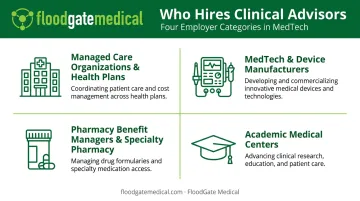
Four employer types account for most clinical advisor hiring:
- Managed care organizations and health plans — the strongest source of verified postings, covering formulary review, utilization management, and care coordination
- MedTech and device manufacturers — advisors here support product training, field clinical work, and market access messaging
- Pharmacy benefit managers and specialty pharmacy operations — often the highest-paying track, especially for oncology or rare-disease specialization
- Academic medical centers — smaller footprint for this exact title, with responsibilities often folded into other clinical leadership roles
MedTech employers, in particular, place a premium on advisors who can walk into a hospital, train a field team on a new device, and speak credibly to both clinicians and regulatory reviewers. That's a different skill set than pure formulary review, and it's one FloodGate Medical sees firsthand while recruiting across commercial, clinical, marketing, and operations roles for MedTech companies.
Given these differences in employer needs, match your clinical background to the sector's actual needs before applying anywhere. A behavioral-health license fits managed-care advisor roles well. A cath lab or device-adjacent clinical background fits MedTech far better.
Frequently Asked Questions
What is the role of a clinical advisor?
A clinical advisor uses licensed clinical expertise to guide business, regulatory, or care decisions, from reviewing formulary choices to educating stakeholders on compliance. Duties vary widely depending on the employer and industry.
How much do clinical advisors make in the US?
Verified 2026 postings range from about $86,300 for a senior pharmacy role at Humana to $228,800 for a specialty oncology advisor role at CVS Health. Certification, seniority, and industry drive most of the difference.
What skills do you need to be a clinical advisor?
You need an active clinical license and several years of direct patient care or case management experience, plus strong cross-functional communication skills. Certifications like CCM or CPHQ can strengthen your application but aren't always required.
What degree or license do you need to become a clinical advisor?
Most roles require an active license in nursing, pharmacy, medicine, or social work, paired with the corresponding degree. The specific license depends entirely on which sector and function you're targeting.
Is a clinical advisor the same as a medical science liaison?
No. MSLs focus on scientific exchange with external experts in a therapeutic area, typically within Medical Affairs. Clinical advisors more often own internal workflows like formulary decisions, care transitions, or field clinical support.
How long does it take to become a clinical advisor?
Plan on your initial licensure period plus at least 3 years of direct clinical or case-management experience. Senior advisory roles typically expect 5 or more years before you're considered.