That confusion isn't harmless. It shapes how patients decide when to see a doctor versus when to change a habit. It influences how MedTech companies design products. And it affects how hiring teams build out talent that can support both sides of the equation.
Here's a number that makes the stakes clear: the United States spent $14,775 per person on health consumption in 2024, nearly double the $7,860 average among comparable countries. Yet U.S. life expectancy sits at 79.0 years, trailing the 82.7-year average of those same peer nations, according to Peterson-KFF's Health System Tracker. More medical spending doesn't automatically translate to better health outcomes. Understanding why starts with separating these two concepts.
Key Takeaways
- Medical care treats existing illness or injury through clinical intervention.
- Health care is the ongoing pursuit of wellbeing through prevention and lifestyle management.
- Medical care is reactive and short-term; health care is proactive and continuous.
- Neither replaces the other — most people need both at different points in life.
- MedTech companies must hire for both clinical treatment and preventive wellness roles.
Medical Care vs. Health Care: Quick Comparison
Here's how the two concepts stack up side by side:
| Dimension | Medical Care | Health Care |
|---|---|---|
| Primary Focus | Diagnosing, treating, and curing existing illness or injury | Preventing illness and promoting long-term wellbeing |
| Who Provides It | Doctors, surgeons, licensed medical professionals | Doctors, nurses, nutritionists, therapists, and the individual |
| Payment & Access | Usually insured, billed per service | Mix of insured and out-of-pocket lifestyle activities |
| Time Horizon | Short-term, episodic | Ongoing, continuous |
| Patient Role | Passive recipient of treatment | Active participant in outcomes |
This table maps out where different needs get met, and by whom, rather than ranking one form of care above the other.
What Is Medical Care?
Medical care is the diagnosis, treatment, or management of a specific illness, injury, or condition, delivered by a licensed provider. It's what happens when something has already gone wrong and requires intervention.
In the MedTech and clinical space, this is where devices, diagnostics, and procedures live. Surgical tools, imaging systems, and interventional devices exist specifically to support medical care delivery in acute settings.
Core hallmarks of medical care:
- Reactive — triggered by a diagnosed problem, not a general wellness goal
- Symptom- and condition-focused
- Dependent on licensed providers for delivery
- Narrow in scope but critical when needed (emergencies, acute illness, surgery)
Levels of Medical Care
Health systems typically describe medical care across four levels of increasing specialization:
- Primary care — first-contact, ongoing care for most health needs
- Secondary care — specialist consultation, usually reached via referral
- Tertiary care — advanced treatment for complex conditions at major hospitals
- Quaternary care — highly specialized, often experimental procedures
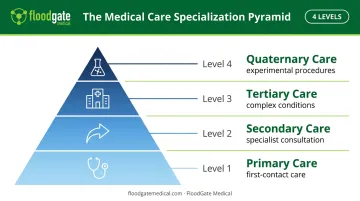
These levels track specialization and referral complexity, not a scale from prevention to treatment. Primary care includes plenty of reactive treatment, and specialist care isn't automatically "less preventive."
Use Cases of Medical Care
Medical care shows up at some of the most consequential moments in a patient's life: emergency rooms, surgical suites, diagnostic imaging, and prescription management.
Interventional cardiology is a good example of medical care at work. During complex percutaneous coronary intervention (PCI) or chronic total occlusion (CTO) procedures, cardiologists rely on specialized microcatheters to navigate tightly blocked or tortuous coronary vessels.
Purpose-built devices address specific challenges in these procedures:
- ASAHI's Corsair Pro and Corsair Pro XS support CTO and complex PCI cases, including the retrograde approach
- SASUKE adds catheter stability during bifurcation lesion treatment
- Tornus is designed to cross highly stenosed lesions that standard catheters can't manage
None of that is preventive. It's medical care in its purest form: precision tools built to resolve an acute, diagnosed problem, often when there's no substitute for intervention.
What Is Health Care?
Health care is broader. It's the ongoing set of behaviors, services, and support systems that maintain and improve overall wellbeing, whether or not a specific illness is present.
This is the model behind the wellness and digital health ecosystem. Wearables, remote monitoring tools, and preventive tech are all designed around health care's proactive logic, not medical care's reactive one.
Core hallmarks of health care:
- Proactive — addresses root causes before a crisis develops
- Patient-driven, with the individual as an active participant
- Broad-spectrum, spanning nutrition, sleep, movement, and mental wellbeing
- Central to chronic disease management over time
Health care also takes several forms beyond the clinic:
- Self-care — daily habits like diet, exercise, and sleep
- Community and home care — support systems outside formal facilities
- Public health initiatives — population-level prevention programs
- Digital and remote monitoring — wearables and connected health apps
Use Cases of Health Care
Health care fits into daily life through nutrition choices, exercise routines, sleep habits, stress management, and preventive screenings. It's less dramatic than an ER visit, but the cumulative effect is significant.
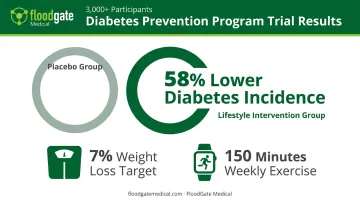
Consider type 2 diabetes prevention. The landmark Diabetes Prevention Program was a randomized trial involving over 3,000 high-risk participants.
Its intensive lifestyle intervention (targeting at least 7% weight loss and 150 minutes of weekly activity) produced a 58% lower incidence of type 2 diabetes compared to placebo, according to NIH's Diabetes Prevention Program findings. That's health care doing what medical care alone often can't: changing the trajectory before treatment becomes necessary.
Wearables and connected devices reflect this shift too. More than half of U.S. adults now own a wearable device, most commonly tracking activity, sleep, or heart rate. The evidence on outcomes is still mixed, but the behavior shift toward self-monitoring is real and growing.
Medical Care vs. Health Care: Which One Do You Need?
This isn't an either/or decision. Most people need both, just at different moments.
Choose medical care when:
- You have an injury, infection, or newly diagnosed condition
- Symptoms require professional diagnosis or intervention
- The situation is acute, urgent, or surgical
Prioritize health care when:
- You're managing a chronic condition long-term
- Your goal is prevention rather than treatment
- You're building sustainable habits around nutrition, activity, or sleep
For MedTech companies, this distinction is a strategic decision. Are you building a treatment device for the cath lab, or a prevention tool for the consumer's wrist? Each path demands its own regulatory expertise, go-to-market strategy, and talent pool.
This split matters for hiring, too. FloodGate Medical, a recruitment firm focused exclusively on the medical technology industry, helps companies build teams that understand both worlds.
That means clinical and commercial talent for a device built around acute treatment, or product and marketing talent for a wellness platform built around prevention. Bridging both is no longer optional for teams building at this intersection.
Real-World Example: Dexcom's Expansion Into Prevention
Dexcom built its business on prescription continuous glucose monitors (CGMs) for people managing diabetes with insulin. But the company identified a gap: more than 25 million U.S. adults have type 2 diabetes and don't use insulin, meaning most never had prescription access to glucose data.
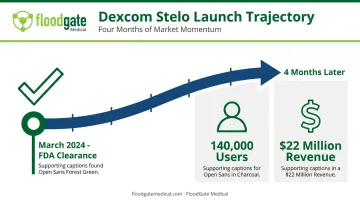
The operational challenge was clear. Dexcom's core treatment products weren't reaching a much larger prevention-minded audience. In March 2024, the FDA cleared Stelo, Dexcom's first over-the-counter glucose biosensor for adults not using insulin, including people without diabetes who simply want lifestyle insight.
The results came fast. By the end of 2024, just four months after launch, Stelo had reached approximately 140,000 users and generated $22 million in revenue, according to MedTech Dive's coverage of Dexcom's OTC strategy. Dexcom didn't abandon its treatment business. It expanded alongside it, adding a prevention-focused product line without diluting its clinical core.
The takeaway for MedTech leaders: aligning product strategy across the medical-to-health continuum only works if your hiring strategy does the same. Companies building at that intersection need talent who can speak both languages, clinical rigor and consumer wellness. That's the kind of cross-functional hiring FloodGate Medical's DEI-driven recruitment approach is built to support.
Conclusion
Medical care and health care serve different purposes rather than compete for the same role. Together they form one continuum: medical care resolves the crisis, while health care sustains what comes after and prevents the next one.
Getting the distinction right pays off in practical ways. Patients make smarter decisions about when to call a doctor versus when to change a habit. MedTech companies build sharper product strategy, and organizations operating across both spaces build stronger, more versatile teams to support them.
Frequently Asked Questions
What is the simple definition of medical care?
Medical care refers to a licensed provider's diagnosis, treatment, or management of a specific illness or injury. It addresses a problem that already exists rather than preventing one.
What's another word for medical care?
Common related terms include clinical care, medical treatment, and health services. Each carries slightly different emphasis, but all point to professional intervention for a diagnosed condition.
What is the difference between health care and medical care?
Medical care treats existing illness through short-term, provider-driven intervention. Health care is the broader, ongoing pursuit of wellbeing through prevention and self-management, with patients playing an active role.
Is medical care the same as health care?
No, though they overlap. Medical care is one component within the larger health care picture. Both are necessary parts of overall wellbeing, just addressing different needs at different times.
What is an example that shows the difference between health care and medical care?
Getting a cast for a broken bone is medical care: reactive treatment for a specific injury. Managing type 2 diabetes risk through diet and exercise is health care: ongoing, preventive, and patient-driven.
Which is more important, health care or medical care?
Neither is more important; they serve different roles. Medical care is indispensable in emergencies and acute illness. Health care is essential for long-term prevention and chronic condition management.