Introduction
You're scanning a hospital monitor or a lab printout, and there it is: HR 78. No context, no explanation, just two letters and a number.
Medical abbreviations like this constantly trip up patients and even new clinical staff. HR is one of the most frequently tracked values in healthcare, yet its meaning shifts depending on where you see it. On a bedside monitor, it means one thing. In a MedTech company's job posting, it means something else entirely.
This guide breaks down HR's clinical definition, normal ranges by age, how it's measured, and what happens when it strays outside healthy limits. We'll also cover HR's other identity: Human Resources, a term that matters just as much in the business side of healthcare.
Key Takeaways
- HR stands for Heart Rate on most clinical charts, Heart Rate is measured in beats per minute (bpm)
- Normal resting adult HR runs 60-100 bpm, though age and fitness affect that range
- Clinicians track HR through pulse checks, ECG/EKG, pulse oximetry, and wearable monitors
- Outside the clinic, especially in MedTech business settings, HR usually means Human Resources
What Does HR Mean in Medical Terminology?
In a clinical setting, HR means Heart Rate, the number of times your heart beats in one minute. It's one of four core vital signs clinicians check at nearly every visit, alongside blood pressure, respiratory rate, and body temperature.
Why does it get this much attention? Because heart rate is a fast, non-invasive window into cardiovascular and overall health. A rising or falling HR often signals something changing in the body before other symptoms show up.
Normal HR Ranges by Age
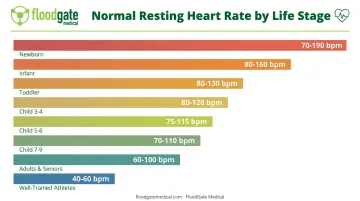
Resting heart rate isn't a single number. It shifts dramatically from infancy through adulthood. According to MedlinePlus, here's what's considered typical:
| Life Stage | Normal Resting HR |
|---|---|
| Newborn (0-1 month) | 70-190 bpm |
| Infant (1-11 months) | 80-160 bpm |
| Toddler (1-2 years) | 80-130 bpm |
| Child (3-4 years) | 80-120 bpm |
| Child (5-6 years) | 75-115 bpm |
| Child (7-9 years) | 70-110 bpm |
| Adults & seniors (10+) | 60-100 bpm |
| Well-trained athletes | 40-60 bpm (can be normal) |
That last row surprises a lot of people. A resting HR in the 40s would raise concern in most patients, but for a conditioned endurance athlete, it's often just an efficient heart at work.
What Makes HR Fluctuate
Heart rate rarely sits still. According to the American Heart Association, common triggers include:
- Exercise intensity - the harder you work, the faster your heart pumps
- Stress and emotion - anxiety, fear, and even happiness can spike HR
- Fever and temperature - both external heat and internal fever push HR up
- Dehydration or infection - the heart compensates by beating faster
- Medications - beta blockers and calcium-channel blockers slow HR; stimulants raise it
- Thyroid conditions - hyperthyroidism speeds the heart; hypothyroidism slows it
Regardless of what's driving the change, "HR" appears the same way on every chart, whether you're reading an ICU monitor, an EMS run sheet, or a routine office visit note. That consistency means any clinician can instantly interpret the number, no matter where it's recorded.
How Is HR Measured in Clinical Settings?
Clinicians have several ways to capture heart rate, and the method usually depends on urgency and setting:
- Manual pulse check - pressing two fingers against the radial artery (wrist) or carotid artery (neck) and counting beats for 60 seconds
- Pulse oximetry - a fingertip clip that uses light to estimate both pulse rate and oxygen saturation
- ECG/EKG - captures the heart's electrical activity, showing rate and rhythm at that moment
- Continuous cardiac monitors - bedside telemetry or Holter monitors that track HR over hours or days
Wearables have expanded HR tracking outside the hospital, too. A study of 50 healthy adults tested four popular fitness trackers against ECG and chest-strap references during treadmill running. The Apple Watch III scored a 0.96 concordance rating, while three other wrist devices landed around 0.89.
None of the wrist-worn devices held up well at faster running speeds above 8 mph, though. Smartwatches are useful for casual tracking, but they're not a replacement for clinical-grade monitoring.
Understanding Abnormal HR Readings: Tachycardia, Bradycardia & Beyond
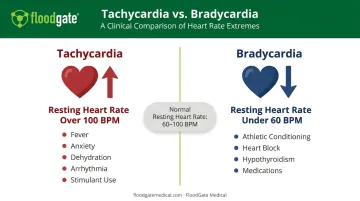
When HR strays outside the 60-100 bpm range for adults, clinicians use two specific terms.
| Condition | Definition | Common Causes |
|---|---|---|
| Tachycardia | Resting HR over 100 bpm | Fever, anxiety, dehydration, pain, arrhythmia, stimulant use |
| Bradycardia | Resting HR under 60 bpm | Athletic conditioning, heart block, hypothyroidism, certain medications |
Tachycardia doesn't automatically mean something's wrong. A stressful commute or a strong cup of coffee can push HR past 100 temporarily. But persistent tachycardia, especially paired with other symptoms, warrants a closer look.
Bradycardia works the same way in reverse. A marathon runner with a resting HR of 48 is likely healthy. A sedentary 70-year-old with the same number, plus dizziness, is a different story.
Why HR Is Never Read in Isolation
Clinicians rarely diagnose off a single vital sign. HR gets read alongside blood pressure and oxygen saturation to build a full clinical picture. An elevated HR with low blood pressure suggests something very different than an elevated HR with normal pressure and low oxygen saturation.
This matters for arrhythmia detection. Atrial fibrillation, an irregular and often rapid heart rhythm, is typically first flagged through pulse palpation and confirmed with a 12-lead ECG.
The CDC projects that 12.1 million people in the U.S. will have AFib by 2050, and the condition contributed to over 232,000 death certificates in 2021 alone. That risk makes it worth knowing exactly when an abnormal reading needs medical attention.
When to Seek Medical Attention
Don't wait out an abnormal HR reading if it comes with:
- Chest pain or discomfort
- Shortness of breath
- Dizziness or lightheadedness
- Fainting or near-fainting
- Sudden confusion or extreme fatigue, especially with a very slow heart rate
One-off readings usually aren't emergencies. Persistent abnormal rates paired with these symptoms are.
Other Medical Abbreviations Easily Confused with HR
Medical charts are packed with two- and three-letter shorthand, and it's easy to mix them up.
What does h/h mean in medical terms? H/H (sometimes written H&H) stands for Hemoglobin/Hematocrit, two blood values rather than heart measurements.
Hemoglobin measures the oxygen-carrying protein in red blood cells, while hematocrit measures the percentage of blood made up of red blood cells. Together, they help clinicians evaluate anemia and overall oxygen-carrying capacity.
A few other abbreviations you'll see charted right next to HR:
- RR - Respiratory Rate, breaths per minute
- BP - Blood Pressure, force against artery walls
- O2 Sat (SpO2) - Oxygen saturation percentage
- Temp - Body temperature
Context usually sorts out the confusion, since a cardiology chart and an ICU flowsheet may define "HR" and nearby abbreviations slightly differently than a lab report. When in doubt, ask the care team rather than guess.
Beyond the Clinic: What "HR" Means in the MedTech Industry
Step outside the exam room and into a MedTech company's office, and "HR" takes on an entirely different meaning: Human Resources.
For companies building devices that measure heart rate, manage arrhythmias, or monitor vitals, HR faces its own set of pressures. MedTech hiring isn't like general corporate recruiting. Companies face distinct hiring challenges, including:
- Regulatory affairs and compliance requirements
- Clinical and commercial roles simultaneously (bridging R&D with sales)
- Specialized technical skills in areas like cardiovascular devices or diagnostics
- Intense competition for a limited pool of experienced talent
This is exactly the gap FloodGate Medical was built to close. Rather than acting as a general staffing agency, it works exclusively within the MedTech space, connecting professionals to companies across commercial, clinical, R&D, and leadership functions.

Talent directors specialize by therapeutic area, whether that's cardiovascular, urology, or GI. That means hiring managers spend less time explaining industry basics and more time evaluating candidates.
FloodGate Medical also builds its recruitment approach around diversity, equity, and inclusion, believing varied teams drive better innovation and outcomes for patients. That mission is summed up simply: "Improving lives by uniting great people with great companies."
The connection to clinical HR runs deeper than wordplay. A well-monitored heart rate keeps a patient stable, and a well-staffed HR function keeps a MedTech company running.
Why Medical Terminology Knowledge Matters for Healthcare & MedTech Careers
Fluency in terms like HR is a practical skill that pays off in daily clinical and commercial interactions.
- Reduces communication errors between clinicians, device reps, and hospital staff
- Builds credibility for sales reps and specialists working directly with cath lab teams or cardiology departments
- Bridges clinical and commercial language, which MedTech employers actively look for in candidates
A device sales rep who understands why a physician flags tachycardia during a procedure demonstration is a more credible partner than one reciting a spec sheet. That fluency shows up in interviews, client conversations, and day-to-day collaboration.
That same blend of clinical and commercial fluency compounds throughout a MedTech career, not just in a single conversation. Professionals building or growing that career can find ongoing insight through resources like FloodGate Medical's monthly newsletter, which covers career opportunities and industry trends across clinical and commercial roles.
Frequently Asked Questions
What does HR stand for in medical terms?
HR stands for Heart Rate, the number of times your heart beats per minute. It's checked as a standard vital sign during nearly every medical visit.
What does h/h mean in medical terms?
H/H stands for Hemoglobin/Hematocrit, two blood values used to evaluate oxygen-carrying capacity. They're commonly ordered to detect or monitor anemia.
What is a normal HR range for adults?
A normal resting adult heart rate falls between 60 and 100 bpm. Trained athletes can run lower, sometimes into the 40-60 bpm range, without any underlying issue.
What causes a high or low heart rate?
High heart rate (tachycardia) often stems from fever, anxiety, dehydration, or arrhythmia. Low heart rate (bradycardia) can result from athletic conditioning, certain medications, or heart block.
Does HR mean something different in a hospital's business or administrative office?
Yes. Outside clinical charts, particularly in business and MedTech settings, HR almost always refers to the Human Resources department managing recruitment and talent strategy.
How can I monitor my heart rate at home?
Take a manual pulse check at your wrist or neck for 60 seconds, or use a wearable device like a smartwatch for ongoing tracking.