

Introduction
Search "medical writing careers" and you'll find a flood of scientists, nurses, and even journalists asking the same question: does this job actually fit my skills?
It's a fair question. Job postings often list vague requirements like "strong writing skills" and "scientific background preferred," without explaining what a medical writer actually does day to day.
Meanwhile, drug and device pipelines keep growing, and companies need people who can turn dense clinical data into documents that regulators, doctors, and patients can use.
This guide breaks down what medical writers really do, helps you self-assess your fit, weighs the honest pros and cons, and covers salary, outlook, and first steps into the field.
Key Takeaways
- Medical writing blends science, regulatory knowledge, and clear communication skills.
- Strong fits enjoy translating complex data, not inventing it
- Regulatory writing pays best but demands rigid structure; other specialties offer more variety.
- Demand keeps climbing with drug and device development, though top-paying MedTech roles stay competitive.
What Is Medical Writing, Really?
The American Medical Writers Association (AMWA) defines medical writing as producing print or digital documents specifically about medicine or health care, requiring both writing skill and scientific knowledge. That combination matters more than raw writing talent.
Here's the part people miss: medical writers rarely work alone. You're usually coordinating input from researchers, regulatory teams, statisticians, and physicians, then synthesizing all of it into one clear, accurate document. Think less "solo novelist" and more "translator with a project management streak."
Types of Medical Writing You Could Specialize In
The field splits into several distinct tracks, each with its own employers and deliverables:
| Type | What You'd Write | Who Hires |
|---|---|---|
| Regulatory | Clinical protocols, study reports, FDA/EMA submissions | Pharma, biotech, MedTech, CROs |
| Publication | Journal manuscripts, abstracts, posters | Pharma, comms agencies, academic institutions |
| Grant | Research proposals, supporting materials | Universities, foundations, health orgs |
| CME/health education | Training materials, patient education, decision aids | Medical education companies, associations |
| Promotional/marketing | Sales materials, websites, brochures | Pharma and MedTech marketing teams |
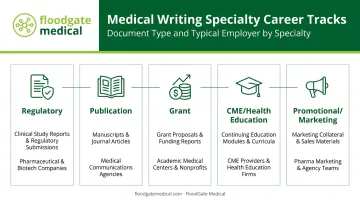
Regulatory writing tends to be the most structured and highest-paying. CME and publication work often offer more variety in topics and audiences. Knowing which lane appeals to you is the first real step in figuring out if this career fits.
Is Medical Writing Right for You? A Self-Assessment
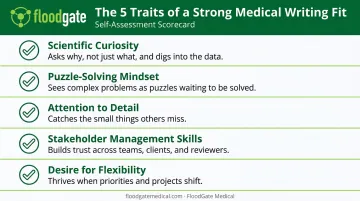
Before chasing certificates or job listings, run yourself through this checklist, since the best medical writers tend to share five traits.
- You're genuinely curious about science. You don't need to be an expert in oncology or cardiology, but you should enjoy reading research papers and figuring out what the data actually means.
- You like solving puzzles, not creating from scratch. The job is about clarity and precision, not personal voice, and if you'd rather write short fiction than simplify a 40-page clinical study report, this may not be your lane.
- You have serious attention to detail. Regulatory writing especially demands comfort with strict formatting rules, compliance checklists, and zero tolerance for ambiguity.
- You can manage people as much as prose. Medical writers juggle multiple stakeholders, competing deadlines, and rounds of feedback from reviewers who don't always agree with each other.
- You want flexibility, with many roles offering remote work, freelance options, or the ability to pivot between pharma, MedTech, and academic settings.
This may not be for you if:
- You dislike rigid structure or highly templated formats
- Ambiguous or incomplete data makes you anxious rather than curious
- You're drawn to writing primarily for creative or emotional expression
If most of the five traits above sound like you, keep reading; if the "not for you" list resonates more, that's useful information too.
The Pros and Cons of a Medical Writing Career
Every career has trade-offs. Medical writing is no exception, and being honest about both sides will save you from a rough transition.
The Upside
- Demand keeps growing. The Bureau of Labor Statistics projects 1% growth for technical writers through 2034, a reasonable proxy given rising clinical trial complexity.
- Flexibility is real. Remote work, freelance contracts, and full-time employment all exist side by side in this field, which suits people balancing other life priorities.
- The work has weight. You're helping move new treatments and devices toward patients, whether you're drafting a submission document or a manuscript.
The Trade-Offs
- Entry is competitive. Higher-paying pharma and MedTech roles often expect prior scientific or regulatory experience before they'll consider you.
- Structure can feel confining. If you crave open-ended creative freedom, regulatory and technical writing may start to feel repetitive.
- Learning never stops. Science evolves, regulatory standards shift, and AI-assisted tools are changing workflows fast enough that staying current is now part of the job description.
Medical Writer Salary and Career Outlook
Compensation varies widely by employer type, experience, and whether you're freelance or full-time. AMWA's 2024 Medical Communication Compensation Survey, based on responses from over 1,000 medical communicators, remains the strongest profession-specific benchmark:
| Employer Type | Mean Full-Time Income |
|---|---|
| Pharmaceutical/biotech | $166,457 |
| Clinical/CRO organizations | $124,736 |
| Medical communications companies | $115,785 |
| Health care organizations/providers | $109,626 |
Source: AMWA's 2024 Compensation Survey infographic
Salary.com's aggregator data shows a similar trajectory by experience level: $66,609 average for less than one year, climbing to $110,729 at 5-8 years, and $144,471 past eight years. Freelancers reported even higher gross income (a mean of $214,227 for writing work), though that figure covers business revenue, not take-home pay after expenses.
Where this is headed:
- Growing R&D investment and personalized medicine trends continue pushing demand for clear scientific communication
- AI tools now assist with drafting, summarizing, and routine editing tasks
- Human judgment still matters most: AMWA and EMWA guidance both stress that accuracy checks, regulatory compliance, and ethical oversight can't be automated away
For now, the career outlook stays positive: demand for precise, ethical scientific communication continues to outpace what AI tools can deliver on their own.
How to Start Your Medical Writing Career
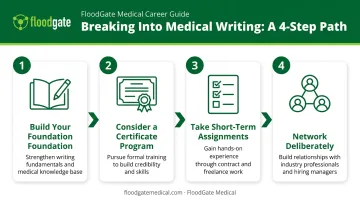
Breaking in doesn't require a straight line from bench scientist to full-time writer. It requires a plan.
- Build your foundation. Strengthen science literacy and create writing samples, even from academic or volunteer work, that show you can explain complex evidence clearly.
- Consider a certificate program. Options like AMWA's Certificate in Essential Skills, UC San Diego Extended Studies, or UChicago's Medical Writing and Editing Certificate can bridge gaps in medical terminology, biostatistics, and regulatory formatting.
- Take short-term assignments. CME projects and similar short engagements build practical experience faster than waiting for a "perfect" first role.
- Network deliberately. According to AMWA's guide to becoming a medical writer, 70-85% of positions get filled through professional connections rather than public job boards, so active participation in professional associations matters more than it might seem.
If you're eyeing roles specifically within MedTech companies, working with a specialized recruiter can help. FloodGate Medical focuses exclusively on MedTech talent acquisition, connecting job seekers with companies hiring for medical writing, regulatory, and clinical communication roles.
Signing up for a MedTech-focused newsletter is also a low-effort way to stay current on hiring trends and emerging opportunities as the industry evolves.
Frequently Asked Questions
What is the future of medical writing?
Growth looks steady, driven by rising drug and device development and increasing regulatory documentation needs. AI is expected to boost productivity rather than replace skilled writers, who remain essential for accuracy and compliance.
How much do medical writers make in the US?
Entry-level roles average around $66,600, while experienced writers with 8+ years can earn $144,000 or more. Pharma and MedTech employers tend to pay the highest, per AMWA's 2024 survey.
Do I need a science degree to become a medical writer?
Not always, but a science background or equivalent research experience is increasingly expected, particularly for regulatory writing roles. EMWA notes writers also come from medicine, veterinary science, and language backgrounds.
Is medical writing a stressful job?
Deadlines and regulatory precision create real pressure, especially in agency settings with multiple simultaneous projects. Many writers still find the structured nature of the work manageable and satisfying.
Can I become a medical writer without prior experience?
Yes, though it takes intentional effort. Certificate programs, freelance or short-term projects, and transitioning from research or clinical roles all help build the credibility employers look for.
Is medical writing a good fit for introverts?
Much of the work involves independent research and drafting, which suits people who prefer focused, solo tasks. That said, collaboration with reviewers and stakeholders is still a regular part of the job.