Medical device sales is pulling nurses out of hospitals in growing numbers, and it's not hard to see why. The pay ceiling is higher, the patient impact is still real, and the physical toll is lower. But the move isn't automatic. Many nurses aren't sure their clinical skills translate to a sales floor, worry about starting over at the bottom, or simply don't know where the on-ramp is.
This guide breaks down why nurses are unusually well-suited for this field, gives you a step-by-step roadmap for making the switch, sets realistic salary expectations, and flags the challenges nobody puts in the recruiting brochure.
Key Takeaways
- Nurses bring instant clinical credibility that most sales candidates spend years building
- A bachelor's degree, not a healthcare background, is the standard entry requirement
- Reaching six figures depends more on specialty choice and commission structure than tenure
- Expect an income dip in year one while you build a territory and a pipeline
- Networking and recruiter relationships shrink the transition timeline dramatically
What Is Medical Device Sales?
A medical device sales rep works as a technical consultant far more than a pitch artist, spending most of the day inside hospitals and operating rooms.
Reps educate surgeons and staff on how a product works, troubleshoot during procedures, and manage inventory. They also provide in-OR case support when a device is being used for the first time on a patient, blending product knowledge with relationship management and quick problem-solving when a case doesn't go as planned.
The market opportunity backing this career path is substantial. The global medical device market hit $739.6 billion in 2023 and is projected to grow at a 9.8% compound annual growth rate through 2029, according to BCC Research's 2024 market forecast. That growth translates directly into hiring demand.
Here's what most nurses don't realize:
- Most companies require only a bachelor's degree for entry-level and associate sales roles, with no nursing license or healthcare degree required
- A general sales background helps, though clinical experience often carries more weight than formal sales training
- Recruiters treat clinical experience as a genuine differentiator on a resume
In other words, your BSN already checks the education box. What sets you apart is everything you learned on the floor that a business major never will.
Why Nurses Make Exceptional Medical Device Sales Reps
Nursing builds a specific kind of judgment: fast decisions, high stakes, zero room for guessing. That same instinct is exactly what surgeons want standing next to them in an OR when a device malfunctions or a case takes an unexpected turn.
Nurses also already speak the language. Anatomy, pathophysiology, terminology, procedural flow, none of it needs translating. When a rep can discuss a case in the same clinical shorthand a surgeon uses, credibility happens in minutes rather than months.
Relationship-Building & Trust
Years of coordinating with surgeons, anesthesiologists, and OR staff taught you how care teams actually function, not how an org chart says they should. That matters because physicians buy differently from most customers.
- Clinical workflow fluency builds trust that spec sheets can't match
- OR experience gets noticed, even without a single word about it
- Informed questions stick with physicians long after generic pitches fade
Patient-Centered Mindset
Device trials and fittings often involve direct patient contact, and bedside manner doesn't disappear just because your title changed. Nurses bring an instinct for patient comfort and dignity that shows up in small moments most reps never think to consider.
Stryker's careers team puts it plainly: nursing experience creates "immediate credibility" in hospitals and directly supports the clinical conversations and relationships reps need to build. According to Stryker's own career-change resource for nurses, that credibility is a documented hiring advantage.
This isn't lost on manufacturers. Stryker, Zimmer Biomet, Medtronic, and Smith+Nephew all actively recruit clinical talent, and plenty of associate sales postings mark prior B2B sales experience as a bonus rather than a prerequisite. Your OR hours count for more than you'd think.
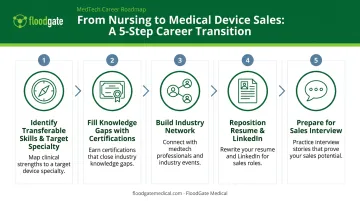
Step-By-Step: How to Transition from Nursing to Medical Device Sales
Making this move works best as a sequence, not a scramble. Here's the order that tends to produce results.
Step 1: Identify Your Transferable Skills and Target Specialty
Your clinical background points toward a natural device category. Match it before you start applying blindly.
| Nursing Specialty | Aligned Device Category |
|---|---|
| OR / Perioperative | Surgical technologies, orthopedics |
| Cardiac / Cath Lab | Cardiac rhythm, interventional cardiology |
| Orthopedics | Joint replacement, spine |
| ICU / Critical Care | Neuromodulation, patient monitoring |
Starting in a category that mirrors your clinical background shortens your learning curve and gives you a stronger story in interviews.
Step 2: Fill Knowledge Gaps with Certifications or Self-Study
Certifications like the RMSR (Registered Medical Sales Representative) or general sales credentials such as the CPSP aren't required by employers. But if you're light on formal sales exposure, they can strengthen a resume and show initiative. Treat them as optional reinforcement, not a prerequisite.
Step 3: Build Your Network Within the Industry
This step moves the needle more than any certification. Connect with current reps on LinkedIn, attend industry conferences, and if you're still employed clinically, ask about shadowing a rep during a surgical rotation.
Working with a specialized MedTech recruiter also shortens the path considerably. FloodGate Medical, for example, connects clinical professionals directly with hiring MedTech companies and knows how to translate nursing experience into language hiring managers respond to.
Resources like their Breaking Into MedTech guide and Career Transition Guide are built specifically for this kind of pivot.
Step 4: Reposition Your Resume and LinkedIn for Sales
Clinical achievements need reframing, not rewriting. Patient education becomes persuasive communication. Cross-team coordination becomes stakeholder relationship management. Charge nurse responsibilities become leadership under pressure.
- Lead with outcomes, not duties ("reduced readmissions by X" beats "responsible for patient care")
- Quantify wherever possible, even in clinical roles
- Cut clinical jargon that a hiring manager outside healthcare won't recognize
Step 5: Prepare for a Different Kind of Interview
Sales interviews test something different than clinical competency exams. Expect behavioral questions about resilience, storytelling, and your specific "why sales" narrative. Clinical knowledge gets you in the room; it won't carry the interview on its own.
Practice a two-minute version of your career-change story before you walk in. Interviewers will ask for it, almost guaranteed.
Salary Expectations and Earning Potential
The pay structure looks nothing like a nursing paycheck, and that cuts both ways.
Current data from MedReps' compensation report puts average base salary for medical device sales reps at $110,596, with average total compensation reaching $177,992, though those figures vary widely by specialty, territory, and tenure.
A few things to understand about how this money actually works:
- Compensation is commission-heavy. Base salary is only part of the picture. Top performers routinely exceed their base by a wide margin through commission, unlike a fixed nursing salary.
- Year one is often a step down. You're building a territory and a book of business from zero, so first-year earnings can trail what you made in nursing.
- Growth compounds with tenure. Established reps with strong physician relationships and consistent quota performance see income climb well past that first-year dip.
The tradeoff is patience for upside. Nurses coming from a fixed-salary world need to plan for that gap financially before making the leap.
Challenges to Expect During the Transition
Nobody frames this part on LinkedIn, but it's real, and you should walk in with eyes open.
- The identity shift is bigger than expected. You're no longer providing hands-on care, and biting your tongue in the OR when clinical instinct kicks in takes real adjustment.
- The schedule isn't 9-to-5. Surgery schedules and territory demands dictate your calendar, often including on-call nights, weekends, and holiday coverage for trauma cases.
- Physician trust takes time to earn. Your clinical background opens doors faster, but surgeons buy from reps who show up consistently, not just once.
None of these are dealbreakers. They're just the parts of the job description that don't make it into recruiting materials.
Frequently Asked Questions
Can a nurse become a medical device sales representative?
Yes. A bachelor's degree is typically the only formal requirement, and nursing experience is a hiring advantage many device companies actively seek out.
How can a nurse transition into medical device sales to earn six figures?
Choose a high-value specialty like spine or cardiac, build a strong professional network before applying, and lean into the commission structure once you're established in a territory.
Do I need direct sales experience to break into medical device sales?
No. Many companies hire clinical talent without prior B2B sales experience, valuing product knowledge and relationship-building skills over a quota history.
What does a typical day look like for a medical device sales rep?
Expect a mix of OR case support, physician office visits, hospital administrator meetings, and inventory or administrative work. No two days follow the same pattern.
How long does it typically take to transition from nursing to medical device sales?
Timelines vary from a few months with strong networking and support from a specialized MedTech recruiter like FloodGate Medical to over a year without industry connections or guidance.
Are certifications required to work in medical device sales?
No. Certifications like RMSR or CPSP are optional, but they can help differentiate candidates who don't have a clinical or healthcare background to fall back on.