Healthcare's shift to digital systems, combined with an aging population that needs more medical services, is creating real demand for organized, tech-comfortable professionals who want meaningful healthcare work without direct patient care. Many job seekers struggle to find administrative roles that offer both stability and a clear path forward.
This article breaks down what the job actually involves, the four core parts of a medical record, the education and certification path, current salary and job outlook data, and where the role can take your career.
Key Takeaways
- Medical records specialists compile, code, and protect patient health data in a non-clinical role
- Most entry-level positions require only a postsecondary certificate, not a four-year degree
- BLS projects a $50,250 median salary and 7% job growth through 2034 — well above average
- Advancement paths lead into coding, health information management, compliance, and healthcare IT/data analytics
What Does a Medical Records Specialist Do?
Medical records specialists organize, manage, and protect patient health information for hospitals, clinics, and insurance providers. They make sure records stay accurate, complete, and compliant with regulations like HIPAA.
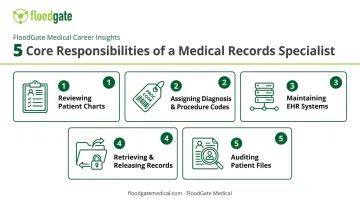
Core responsibilities typically include:
- Reviewing patient charts for completeness and accuracy before filing
- Assigning standardized diagnosis and procedure codes for billing and insurance claims
- Maintaining electronic health record (EHR) systems and databases
- Retrieving and releasing records to authorized providers, patients, or legal entities
- Auditing files to catch errors or missing documentation
Beyond data entry, specialists bridge clinical and administrative teams. They translate physician notes into the standardized codes that insurers and government payers require for reimbursement.
Some specialists focus on a single function, such as coding, while those at smaller facilities often handle multiple roles at once. Either way, solid knowledge of medical terminology and coding systems like ICD-10 and CPT is essential.
As more facilities shift to fully digital record-keeping, the role increasingly includes data security tasks and basic systems troubleshooting alongside traditional documentation work.