That scale creates a common problem: candidates don't know what to expect. A nurse applying to a Texas hospital and a compliance analyst applying to a corporate office in Nashville face completely different interview paths, and the uncertainty adds unnecessary stress to prep.
This guide breaks down every stage of the HCA Healthcare hiring process for 2026, what recruiters actually evaluate at each step, and how to prepare depending on your role type.
Key Takeaways
- HCA moves candidates through application, screening, interviews, and background checks before an offer
- Interview format differs by role: clinical roles assess judgment, corporate roles focus on measurable outcomes
- Most candidates hear back within one to a few weeks, depending on division and urgency
- Statuses like "not hired" and "withdrawn" mean different things and shouldn't be confused
What Is the HCA Healthcare Hiring Process?
The HCA Healthcare hiring process is the structured path the organization and its thousands of sites of care use to source, screen, interview, and onboard candidates. HCA itself frames it simply on its official How We Hire page: apply, interview, then offer.
The goal isn't just filling a seat. HCA is matching candidates to roles where patient safety, regulatory compliance, and operational reliability aren't negotiable, while still checking for team and cultural fit.
Given the organization's footprint across 19 states and the U.K., the process leans more on standardized, technology-supported screening, such as virtual interview tools, than a smaller independent hospital typically would. That said, don't expect a single rigid formula. The process flexes based on:
- Role family — clinical, corporate, supply chain, or technology
- Seniority — entry-level roles typically move faster with fewer stakeholders involved
- Division and facility — local hiring managers often have discretion over interview format and pace
A nurse manager opening in Florida and a supply chain technician role in Tennessee can look nothing alike procedurally, even though both fall under the same corporate parent.
How the HCA Healthcare Hiring Process Works: Step-by-Step
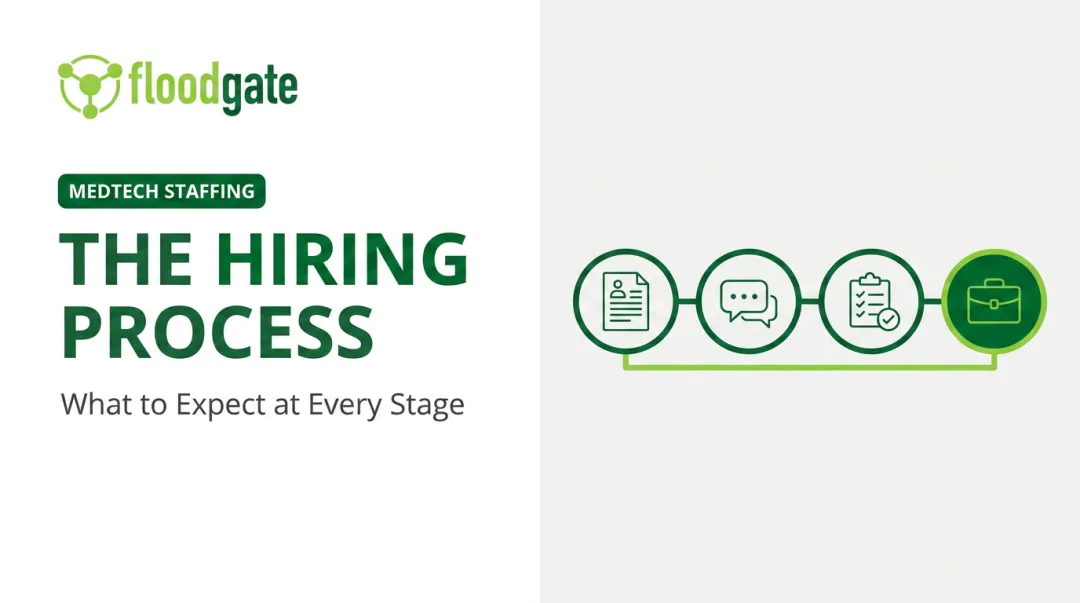
At a high level, the journey moves from application and sourcing, through screening and possible assessment, into functional or panel interviews, and finally background checks and an offer. Early rounds tend to happen virtually. Later rounds, especially for clinical and unit-based roles, often shift in-person.
As candidates advance, the focus shifts too. Early screens check resume fit and basic qualifications. Later rounds dig into scenario-based judgment, team dynamics, and role-specific competency.
Step 1: Application and Sourcing
Candidates typically apply through HCA's careers site, employee referrals, campus recruiting events, or third-party job boards. Whichever path you take, tailor your resume:
- Include complete, accurate work history with no unexplained gaps
- Use role-specific keywords pulled directly from the job description
- Quantify past results wherever possible, even in early-career roles
Step 2: Recruiter or HR Phone/Video Screen
This initial conversation usually covers your experience, motivation for applying, compensation expectations, location, and notice period. Recruiters are also gauging basic alignment with HCA's mission and values here. Come prepared to explain, briefly and specifically, why this role and this division.
Step 3: Assessment or Online Evaluation (Where Applicable)
Certain positions, particularly technical, data, or compliance-related roles, may include a skills assessment or communication check. HCA's own applicant guidance notes that a required web-based assessment link is sent by email when applicable.
Not every role includes this step. If you're unsure, ask your recruiter directly about format, timing, and how it factors into evaluation.
Step 4: Functional, Panel, or Unit Interview
This is where the process becomes role-specific. Clinical candidates typically face scenario-based patient care questions. Corporate and technical candidates face questions centered on quality, compliance, and measurable business impact.
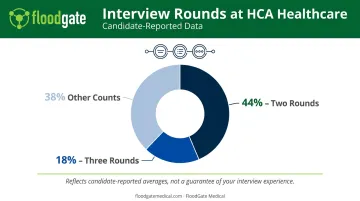
Interview round counts vary, but candidate-reported data from Comparably's HCA Healthcare interview reviews shows an average of about two interviews, with 44% of respondents reporting exactly two rounds and 18% reporting three. Treat that as a directional benchmark, not a guarantee.
Step 5: Background Check, Drug Screen, and Offer
Once selected, HCA typically extends a verbal offer followed by a written offer for acceptance. From there, most remaining steps happen electronically:
- Background check authorization and processing
- Pre-employment health assessment or drug screening (requirements vary by facility)
- Onboarding paperwork and new-hire documentation
Responding quickly to emails at this stage genuinely speeds up your start date. Delays here are one of the most common (and avoidable) reasons onboarding slips.
Interview Rounds and Role-Specific Expectations
HCA's interview depth and focus shift based on which role cluster you're entering: clinical/nursing, corporate/HR/finance, supply chain/hospital operations, or technology/data. Knowing which bucket you're in changes how you should prep.
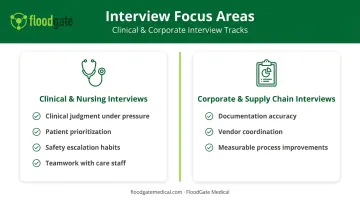
Clinical and nursing interviewers tend to assess:
- Clinical judgment under time pressure
- Prioritization when multiple patients need attention at once
- Patient safety awareness and escalation habits
- Teamwork with physicians, techs, and other unit staff
Expect behavioral and scenario questions, not just knowledge checks.
Corporate, compliance, and supply chain interviewers tend to focus on different territory entirely:
- Documentation accuracy and attention to regulatory detail
- Vendor and stakeholder coordination experience
- Measurable process improvements you've driven in past roles
Candidate reports for HCA's supply chain technician roles, for example, mention group panel interviews occurring alongside background checks and drug tests as a fairly standard sequence for that job family.
Where MedTech-Adjacent Roles Fit
If you're pursuing a MedTech-adjacent position inside a health system, such as device evaluation, clinical engineering, or procurement, you're operating at the intersection of two worlds. You need clinical safety literacy and vendor or technology evaluation skills.
This is a narrower niche than most candidates realize, and it's easy to undersell your background if you're not sure how it translates.
Recruiting firms that focus exclusively on MedTech, like FloodGate Medical, spend their time connecting professionals with device and healthcare organizations. They can help you figure out where your specific background lands within a system as large as HCA, then help you build the narrative that supports it.
Panel interviews, meaning multiple stakeholders interviewing you at once, show up more often for senior, leadership, or cross-functional roles. They're not exclusive to those levels, though. Some supply chain and technical roles use panels earlier in the process than candidates expect.
How to Prepare for an HCA Healthcare Interview (and Avoid Common Pitfalls)
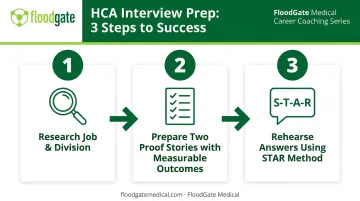
If you want a direct answer to "how do I prepare for an HCA interview," here it is:
- Research the specific job description and division: not just HCA as a company, but the actual facility or department you're interviewing with
- Prepare two proof stories with measurable outcomes: a patient care win and a process improvement, or their equivalents for your field
- Rehearse scenario-based answers using the STAR method: Situation, Task, Action, Result, structured so interviewers can follow your logic quickly
Common Misconceptions Worth Correcting
Many candidates assume every HCA facility runs an identical process. It doesn't. Format, round count, and even attire expectations vary by division, role, and the preferences of the specific hiring manager. Someone else's experience at a different facility isn't a reliable script for yours.
HCA's own guidance is also worth knowing before your interview: legitimate virtual interviews always show a real person, never happen over text or chat, and never require downloading an app. If something feels off, it probably is.
What "Not Hired" vs. "Withdrawn" Actually Means
Application status confusion causes a lot of unnecessary anxiety. Here's the distinction:
- Withdrawn: the candidate or recruiter closed the application, often due to role changes, a filled position, or candidate inaction
- Not hired: your application was reviewed, but another candidate was selected
Neither status is a reflection of your qualifications across the board. It just means that specific role, at that specific moment, went a different direction.
Conclusion
The HCA Healthcare hiring process is structured, but it's far from rigid. Role-specific evidence, safety standards, and compliance expectations shift depending on whether you're applying for a unit-based clinical role or a corporate function.
Success comes down to matching your preparation to the specific role cluster you're targeting, not running generic interview prep and hoping it lands. If you're eyeing a MedTech-adjacent path inside a large health system, a specialized recruiter can add real clarity. FloodGate Medical, for instance, helps candidates see where their background fits, whether at HCA or comparable employers across the industry.
Frequently Asked Questions
How do I prepare for an HCA interview?
Research the specific job description and division, prepare two measurable proof stories, and rehearse scenario-based answers using the STAR method. Generic prep rarely holds up against role-specific questions.
What does "not hired or withdrawn" mean?
"Withdrawn" means the application was closed by the candidate or recruiter, often due to role changes or inaction. "Not hired" means your application was reviewed but another candidate was selected.
How many rounds of interviews does HCA Healthcare conduct?
Candidate-reported data suggests most roles involve around two interviews, with some going to three. Senior or specialized positions can involve additional rounds or panel formats.
How long does the HCA Healthcare hiring process take?
Candidate reports on Indeed's HCA Healthcare interview reviews point to roughly two weeks on average, though timelines shift based on role urgency, division, and how quickly background checks clear.
Does HCA Healthcare conduct background checks and drug tests?
Background checks are a standard, electronic post-offer step across HCA facilities. Drug screening requirements can vary by facility, so confirm specifics with your recruiter after an offer.
What should I wear to an HCA Healthcare interview?
HCA's guidance is to "dress your best" and bring any specifically requested attire, such as scrubs for working interviews. Business professional attire is a safe default for corporate roles.